12/05/2025
Many architects describe this as the next major domestic revolution: spaces that enhance well-being not through what they display, but through what they soften, protect, and mute. A home designed not to exhaust the nervous system.
Silence as the New Form of Luxury (Without Meaning Emptiness)
Silence is not the total absence of noise. It is the ability of a space to create an acoustic balance, eliminating echo and reverberation, improving concentration, voice clarity, rest, and the perception of time.
In contemporary homes — increasingly hybrid spaces between living, working, training, and retreat — acoustic comfort is the invisible layer that determines the level of well-being for those who live there.

AI Generated Content
The Psychology of Domestic Sound
Sound influences:
- the perception of brightness,
- the way we “feel” the size of a room,
- mental fatigue after hours of work,
- the quality of conversations.
An acoustically unbalanced environment produces stress — even when we don’t realize it.

AI Generated Content
Materials That Soften, Textures That Calm
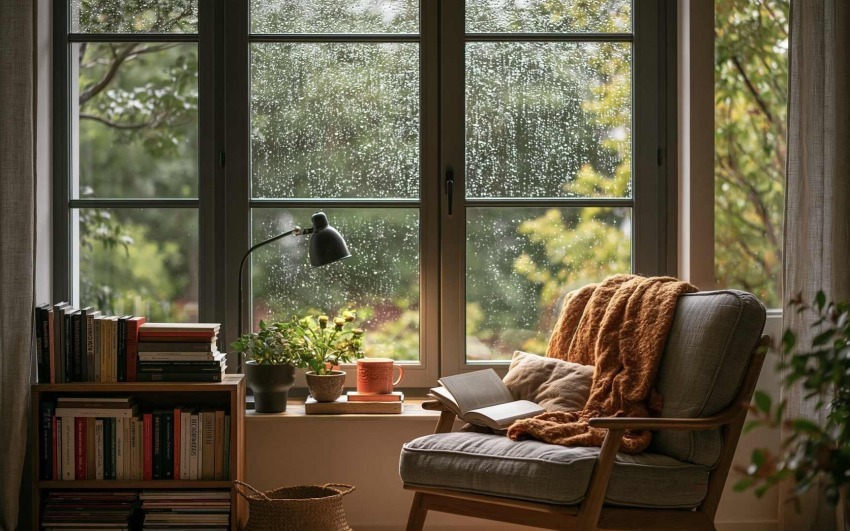
“Silent materials” are surfaces designed to interact with air, absorbing frequencies and vibrations. They are not new — wool, felt, cork have existed for centuries. What’s new is how they are integrated into contemporary interior design.

AI Generated Content

AI Generated Content
The Return of Tactility as Acoustic Intelligence
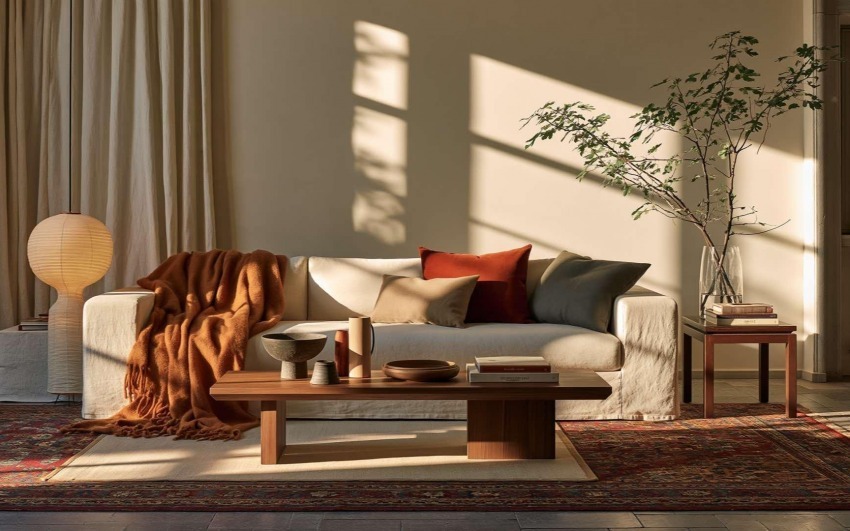
- Heavy cotton or raw linen textiles
- Micro-textured wooden panels
- Soft-touch wall coverings
- High-density rugs
Tactility has become central again: the material that absorbs sound is often the material that invites touch.

AI Generated Content
Curves: The Geometry That Softens Echo
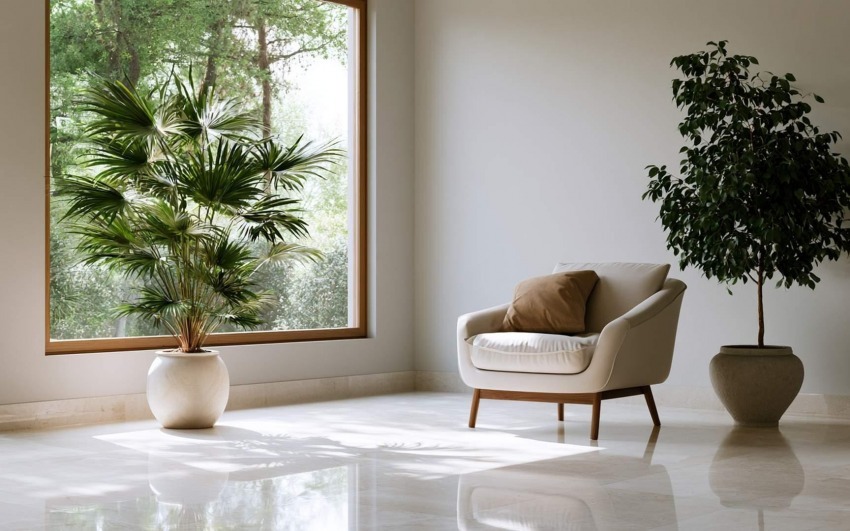
Sharp edges reflect sound; curves diffuse it. This explains the growing return of rounded sofas, soft wall paneling, arched niches, and even lighting pieces with full, sculptural volumes — elements that interrupt the propagation of sound.

AI Generated Content
Acoustic Technology That Doesn’t Look Like Technology
New sound-absorbing solutions no longer look like panels: they become artworks, headboards, invisible suspended ceilings, or continuous surfaces that resemble resin. Even technology now adopts a “silent” visual language.

AI Generated Content
A Home That Welcomes Silence
Homes that do not echo, vibrate, or amplify. Spaces that restore a softer mental dimension. This is the direction: design that listens before it shows itself.

AI Generated Content
Also read how woods, marbles and stones embody “quiet luxury” in interiors at Woods, Marbles and Stones: The Essence of Quiet Luxury in Interiors.
For a contemporary take on acoustic and sensorial design, check out Caimi — acoustic design and functional furniture.

Interior Designer since 1985
CEO & Founder, Italian Design in the World