11/27/2026
Where the holiday things sleep
AI Generated Content
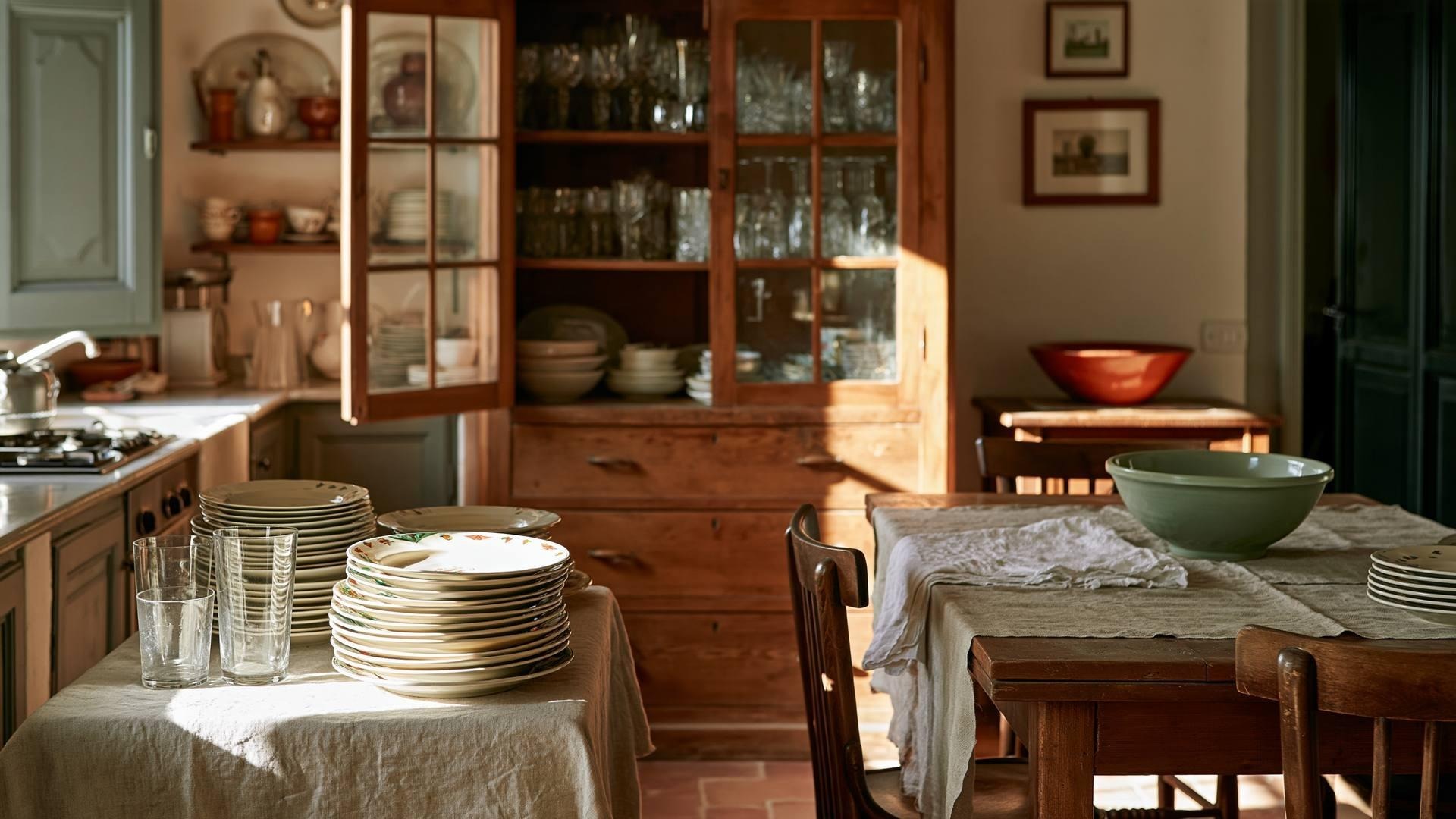
Tableware for special occasions often ends up wherever there was room: plates in the cellar, glasses high up in the kitchen, tablecloths in the bedroom wardrobe. The day of the big lunch becomes a treasure hunt.
AI Generated Content
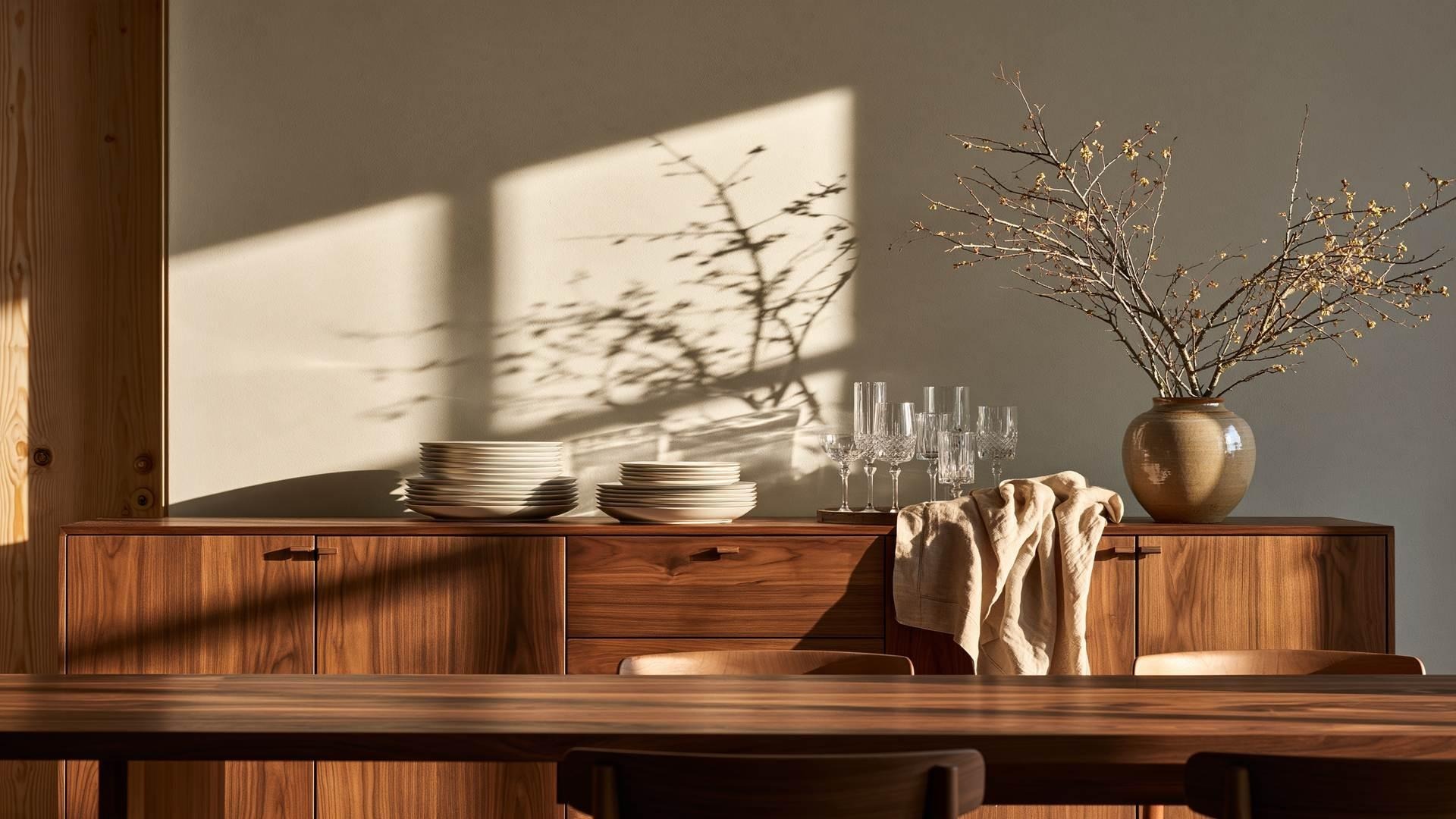
Keeping them all together, close to the table where they will be used, changes the way the table is laid. It is the job the sideboard was made for: keeping in the dining room what the table needs.
Low sideboard or tall cabinet
AI Generated Content
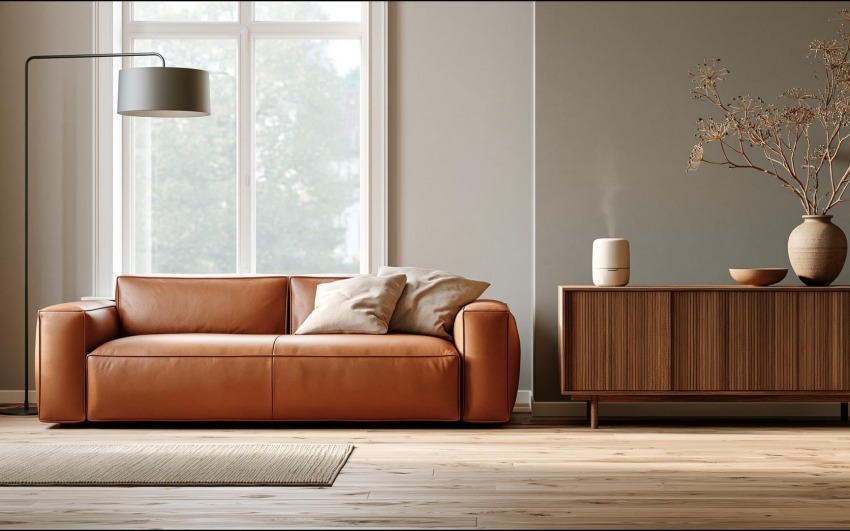
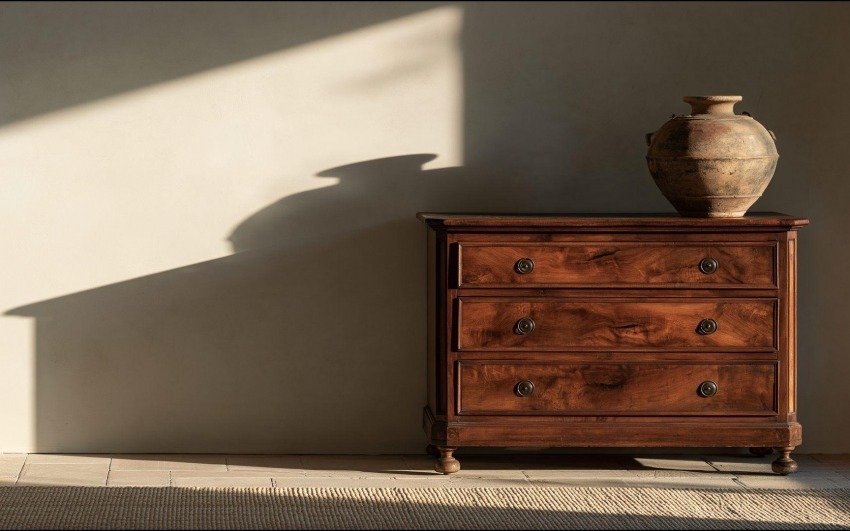
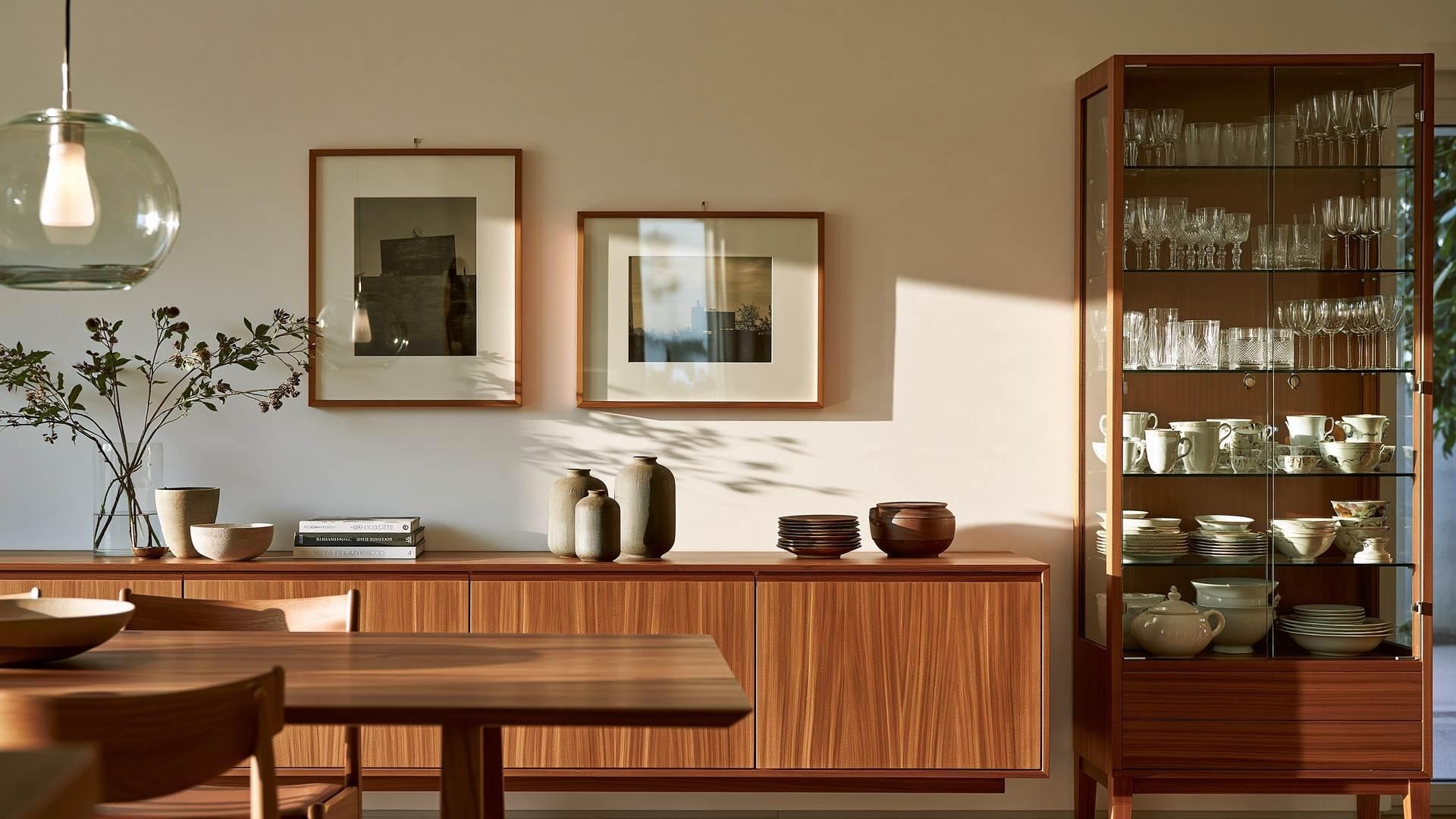
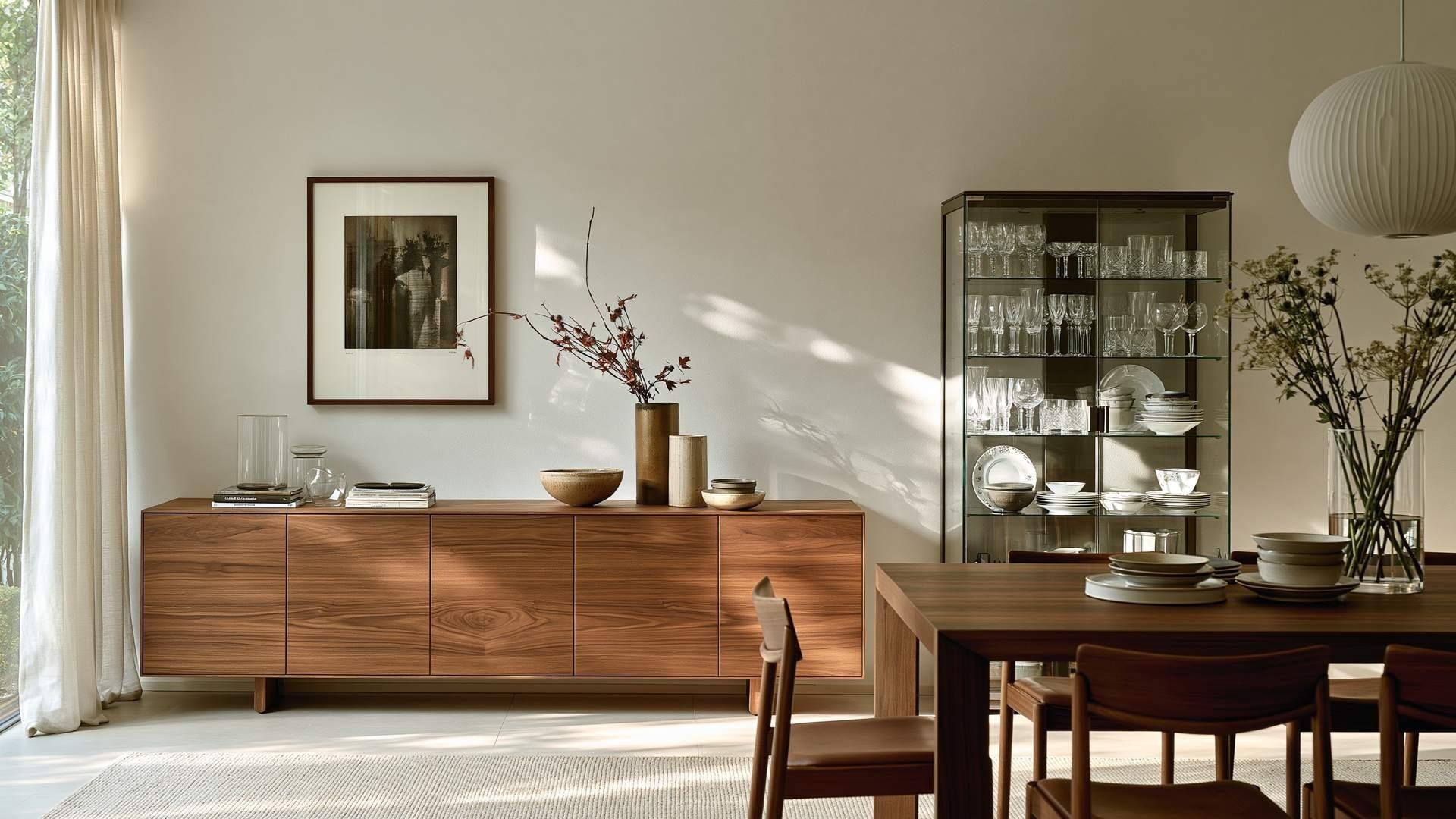
The low sideboard is long, usually between 75 and 90 centimetres high, with a top that becomes a serving surface. A tall cabinet, or a glass-fronted display unit, holds more in less wall and lets you see through the glass what is worth showing.
AI Generated Content
The right depth is between 45 and 50 centimetres, enough for a serving plate. Between the sideboard and the backs of the chairs you need at least 90 centimetres of passage, because during a long lunch people get up often.
Inside, organised by gesture
AI Generated Content
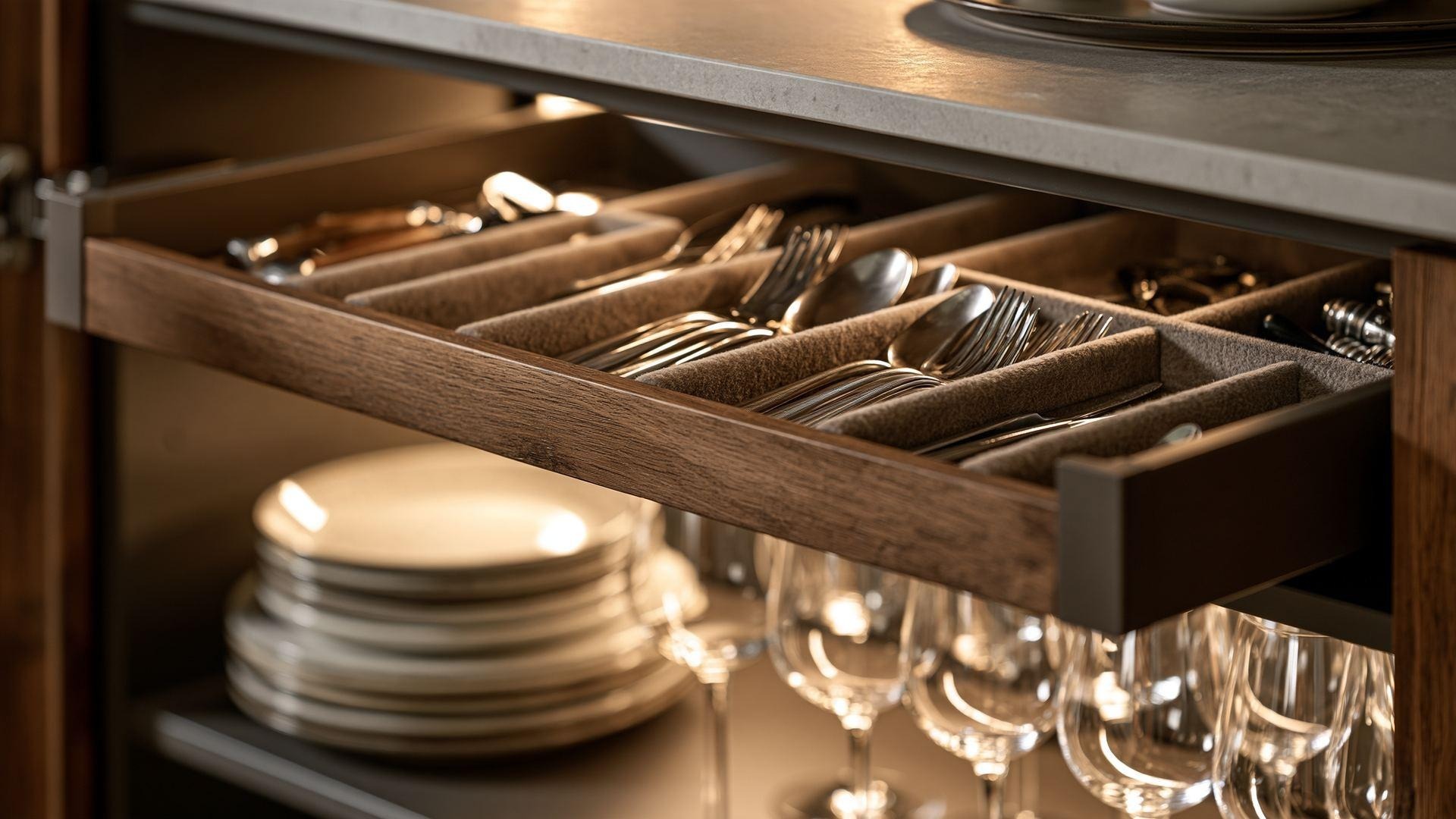
The interior works when it follows the gestures. Plates are better in low stacks or in drawers with dividers, glasses standing on their base so the rim does not chip. Cutlery goes in felt-lined trays that keep it from rattling.
Tablecloths only need ironing once if they stay flat: wide, shallow drawers, or folded in half over pull-out rails. What every Sunday lunch needs goes at hand height; the thirty-place service can live in the lowest compartments.
The top that serves the table
AI Generated Content
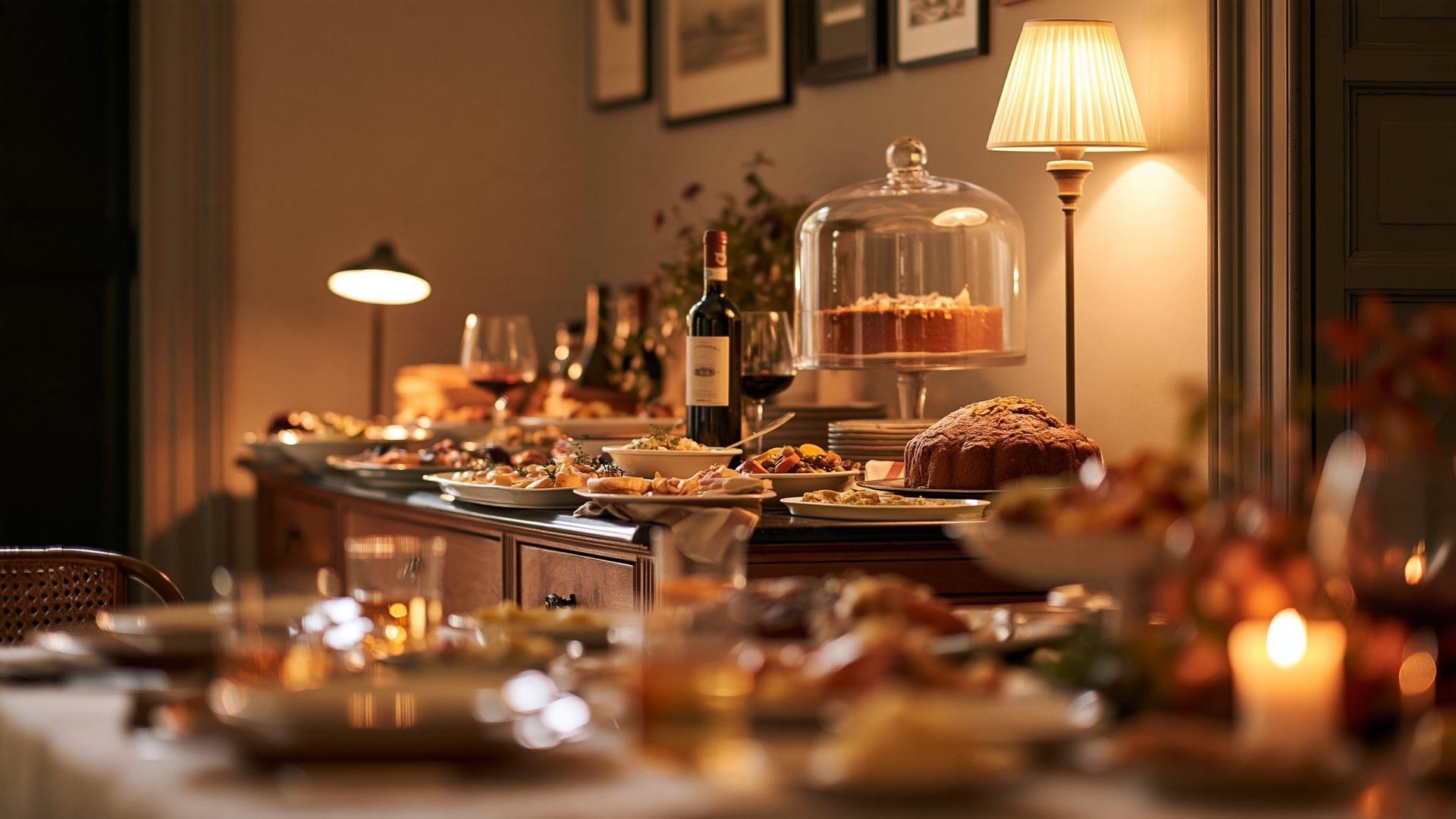
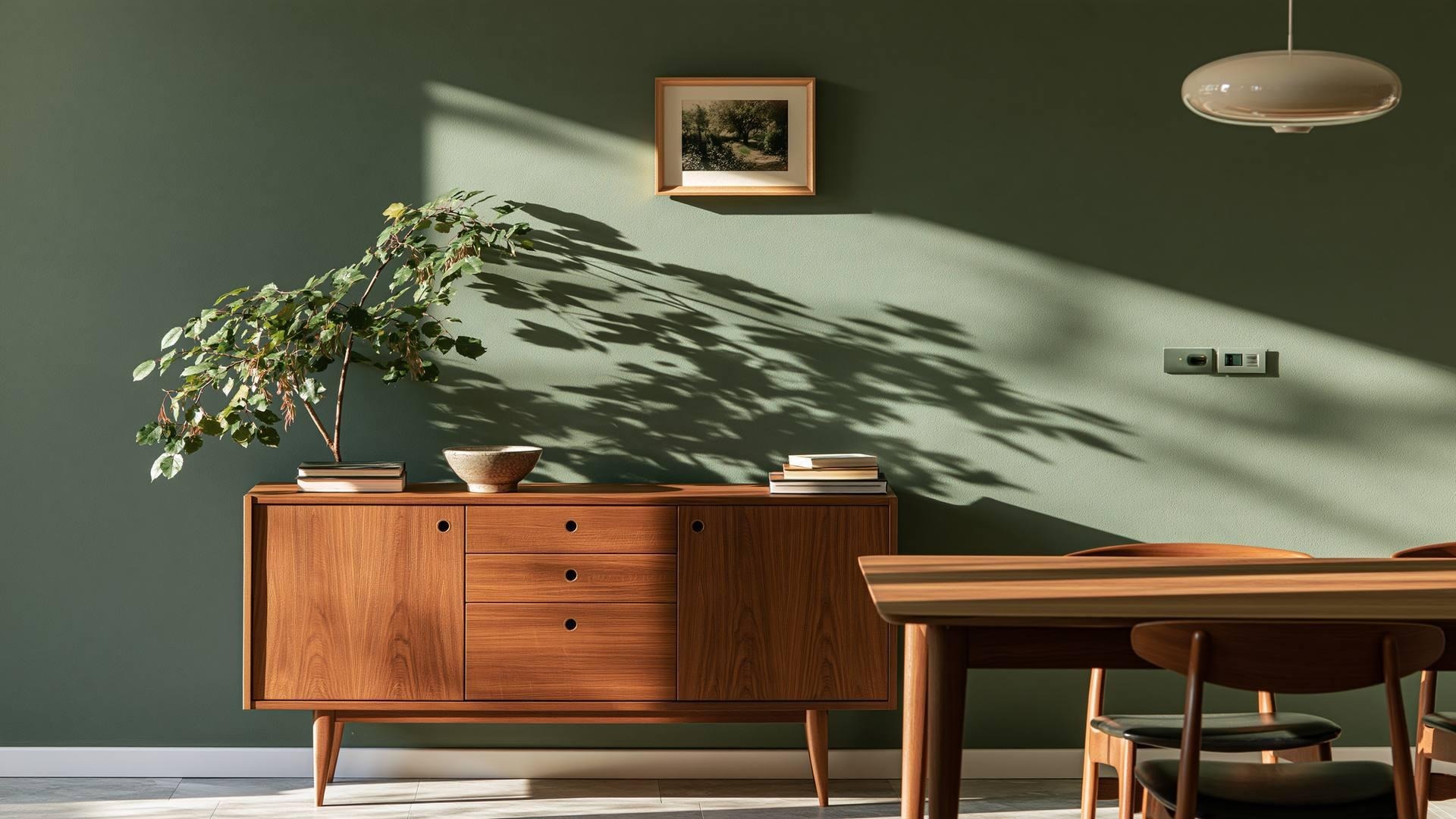
During the holidays the sideboard top works as hard as the table. Serving dishes, bottles and the waiting dessert go there, freeing space for the people eating. That is why a top resistant to heat and stains is worth having, along with a table lamp to light it when the central light is aimed at the table.
Once the holidays are over, the same top goes back to holding books, a bowl for keys, a plant.
In our showroom
AI Generated Content
Choosing a sideboard means first counting what it will hold: how many plates, how many glasses, how many tablecloths. In our showroom we start from that list and from the size of the dining room, then choose shapes, finishes and interiors.
Read more: Sideboards for your living room and the sideboards by Cattelan Italia to give the holiday things a place close to the table.

Interior Designer since 1985
CEO & Founder, Italian Design in the World