5/19/2023
STATION FOR THE LITTER AND BOWLS
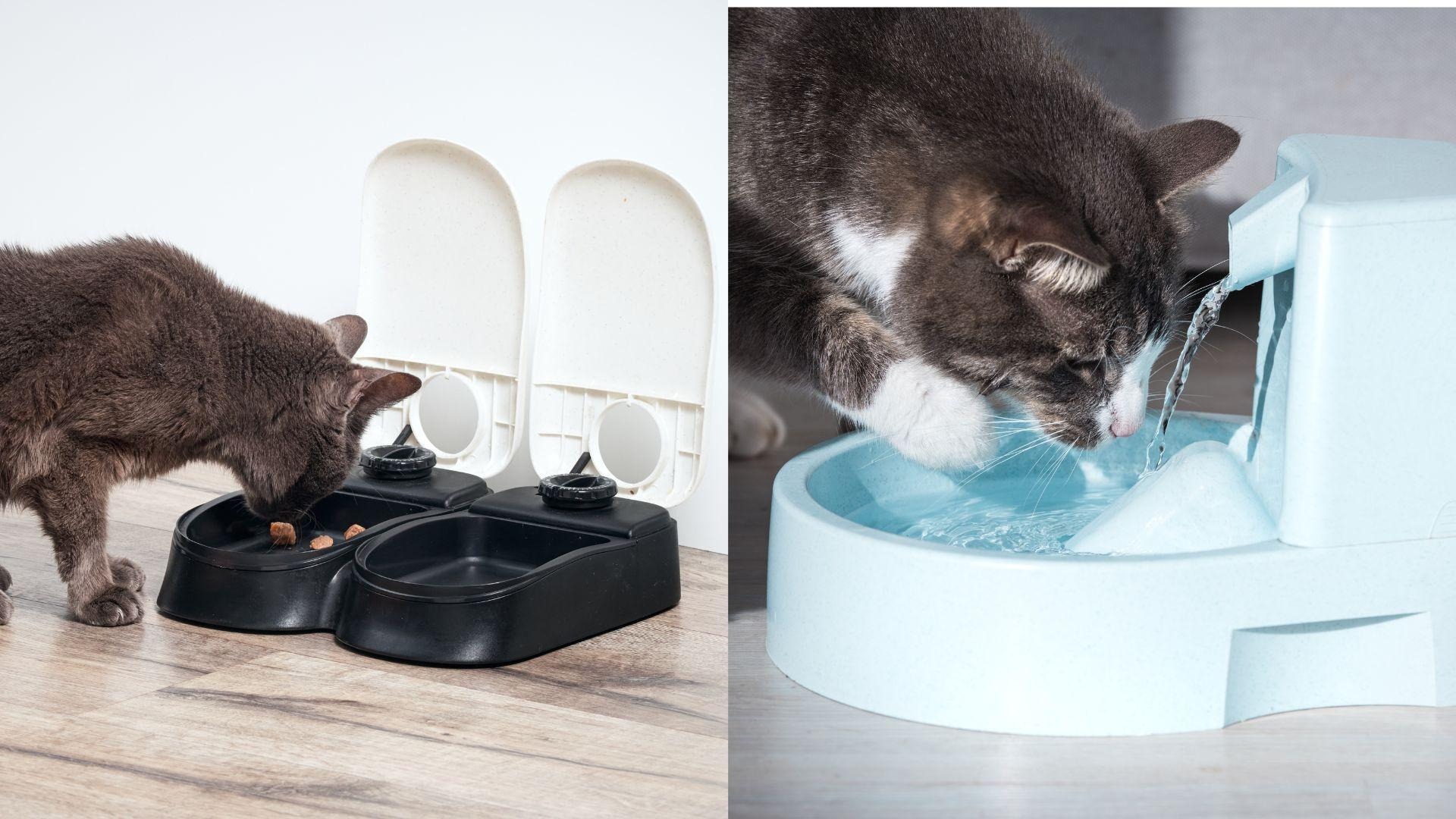
One of the primary issues to address is certainly the positioning of the litter: the advice is to look for an area dedicated to the toilet, easily reachable by your four-legged friend, even if possibly far from the kitchen and bedroom for reasons of hygiene and smells. Possibly, it would be preferable to evaluate a closed litter box, so as to limit odors and give our cat the necessary privacy so that he feels comfortable with him. Another matter of no less importance concerns the bowls, since if the cat finds them uncomfortable or does not feel at ease, he could eat and drink less than he should. Reason why, the advice is to opt for a bowl with continuous water recycling - the classic fountain - which will certainly entice him to drink more, as well as being very graceful to the eye, and large bowls with low edges , as cats hate touching food with their whiskers; even better if in steel or ceramic, since they are materials that do not absorb odors.
AN AREA OR WALL DEDICATED TO LEISURE
To prevent our cat from focusing on its surroundings, perhaps even causing damage to the furnishings of our home, we could think of setting up a wall with a special or do-it-yourself feline path , in the name of functionality and design, totally dedicated to the entertainment of our furry friend. There are infinite varieties on the market today, and there are many ideas on the net that you can put into practice, without exceeding the costs.
KEEPING AREA
In general, cats are animals of habit and distrustful of those they don't know, which is why, when we have many guests at home, we often see them disappear for a while. Therefore, our advice is to recreate a kennel area, possibly closed, similar to a small den or cave where our cat can take refuge if he feels threatened or uncomfortable, without however hiding for hours.
CAT-PROOF UPHOLSTERY
As we well know, cats are passionate about curtains and coverings for the home, which is why the previous advice could be very useful in counteracting their desire to climb everything around them. However, if we wanted to be certain, if we were not able to smooth out their instinct, we could opt for antistatic materials or for resistant and washable synthetic leather and fibers, thus avoiding velvet, wool, fabrics, chenille, … .
HIDE THE DANGERS THAT ATTRACT IT
Even if we often don't realize it, there are some elements that are dangerous for the kitten in our homes: for example, wires or electric cables and sockets, can constitute an enormous danger for our curious and playful kitty but it would be advisable to make them as unreachable as possible. Similarly, all objects that can break with an impact, it would be good to try to store them where, even if they fall on one side, they cannot fall from great heights and therefore shatter, with the risk that the cat plays with the various pieces and does harm when we are not present at home, perhaps by cutting himself or, even worse, by ingesting some sharp pieces.
_14077b47db_23.jpg)
Interior Designer since 1985
CEO & Founder, Italian Design in the World