2/06/2026
In 2026, a new perspective is gaining ground: Neuro-Interior Design, an approach to design that starts from a deeper question:
How does a space feel, before it looks good?
This is not a wellness trend. It’s a cultural evolution of design: less feed-friendly aesthetics, more cognitive comfort. Less noise, more nervous system regulation.
The overstimulating home: the invisible problem
Many contemporary homes, even when they look beautiful, are designed as if human beings were cameras. The environment is perfect to observe, but harder to live in.
But the brain doesn’t work like Instagram. It doesn’t register only aesthetic quality: it registers stimulus load.
Domestic overstimulation means this: a space that silently demands energy. It keeps you in a state of micro-alertness because:
- light is too uniform or too cold
- surfaces are overly reflective
- acoustics amplify every sound
- the environment is full of visual interruptions
- contrasts are strong, constant, and unmodulated
- there is no rhythm — everything is always on
The result is rarely dramatic. It’s subtle. It’s that mental fatigue you can’t fully explain. It’s the difficulty to focus. It’s the urge to leave even when you’re at home.
AI Generated Content
Cognitive comfort: a home that stops demanding and starts giving back
Cognitive comfort has nothing to do with luxury. It has to do with the quality of attention.
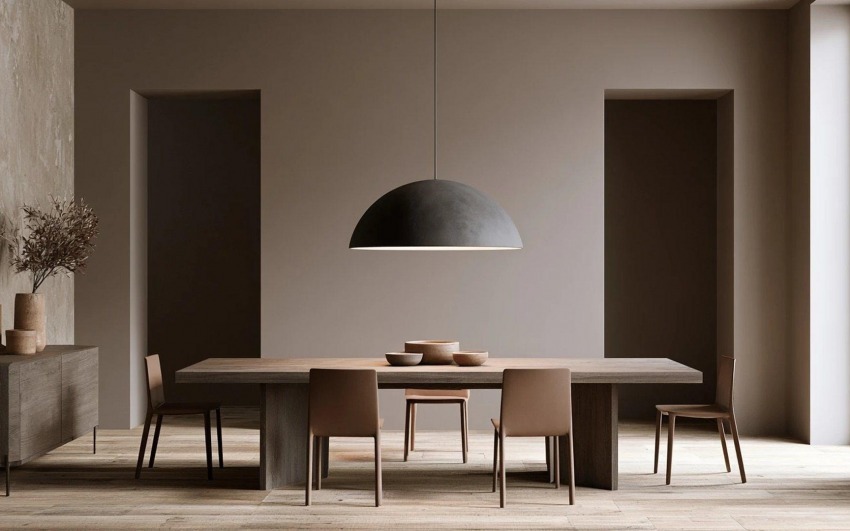
A well-designed interior doesn’t need to prove anything: it should not disturb. It should reduce effort. It should work like a natural landscape — rich enough to feel alive, coherent enough not to overload.
The brain loves:
- continuity
- predictability
- soft variation
- gradual transitions
In other words: it loves spaces that don’t force it to decode everything all the time.
That’s why in Neuro-Interior Design the key words are rhythm, gradation, and breathing room. It’s not extreme minimalism — it’s intelligent stimulus design.
_45aac0982e_.jpg)
AI Generated Content
Circadian lighting — without being boring (promise)
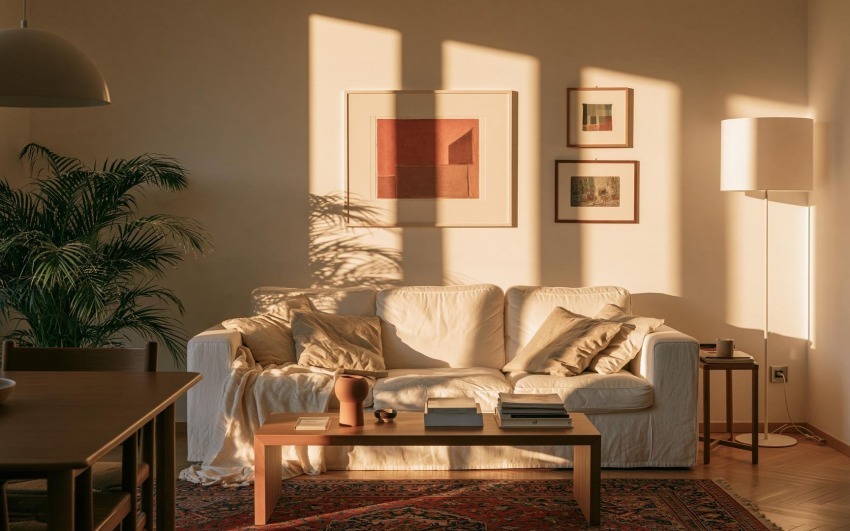
Light is the number one stimulus. Not only because it illuminates, but because it tells the brain what time it is.
Too much cold light in the evening isn’t modern. It’s biological disruption. The nervous system reads that temperature as daytime → activation rises → it becomes harder to switch off.
Contemporary homes often make the same mistake: one single light for everything, always the same.
In the neuro-informed approach, lighting becomes a temporal choreography:
- more active light in the morning and during work
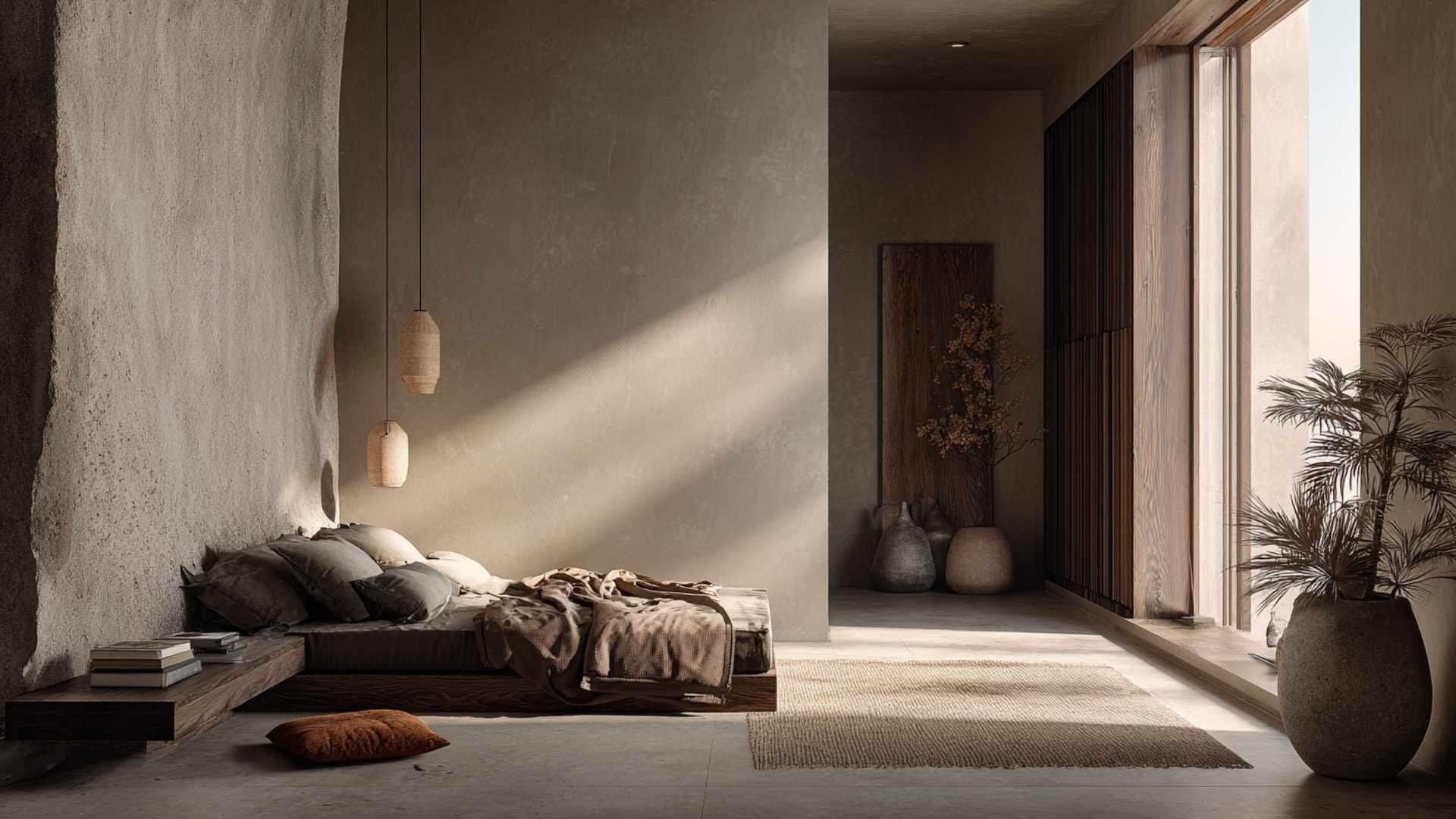
- lower, warmer, lateral light in the evening
- no glare and no flat ceiling fixtures
You don’t need smart home automation for this: you need design. And above all, you need to think of light as something that accompanies, not invades.
_101739791b_.jpg)
AI Generated Content
Calming materials: when matter regulates stress
Some materials shout. Others whisper.
In 2026, the home is no longer just aesthetic — it’s sensory. And materials are powerful nervous system regulators.
A space feels calming when it:
- absorbs light instead of reflecting it
- absorbs sound instead of amplifying it
- has readable texture, not flatness
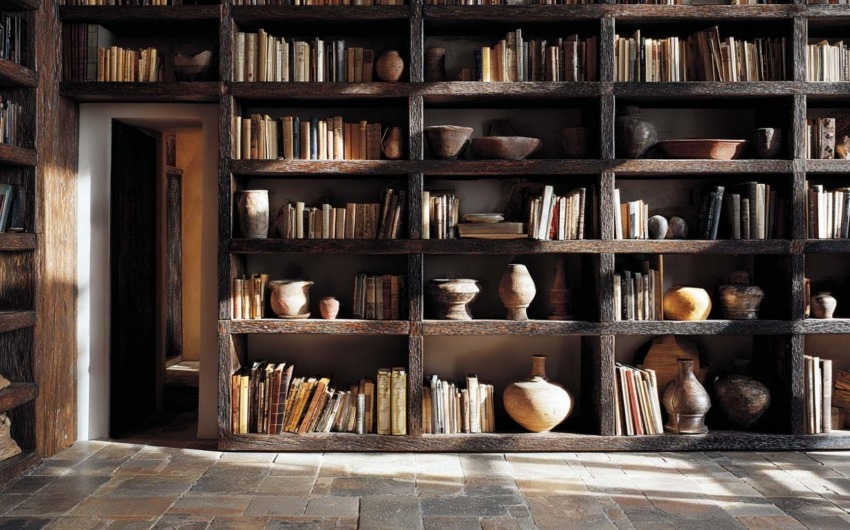
- uses matte, tactile, living surfaces
That’s why we see the return of:
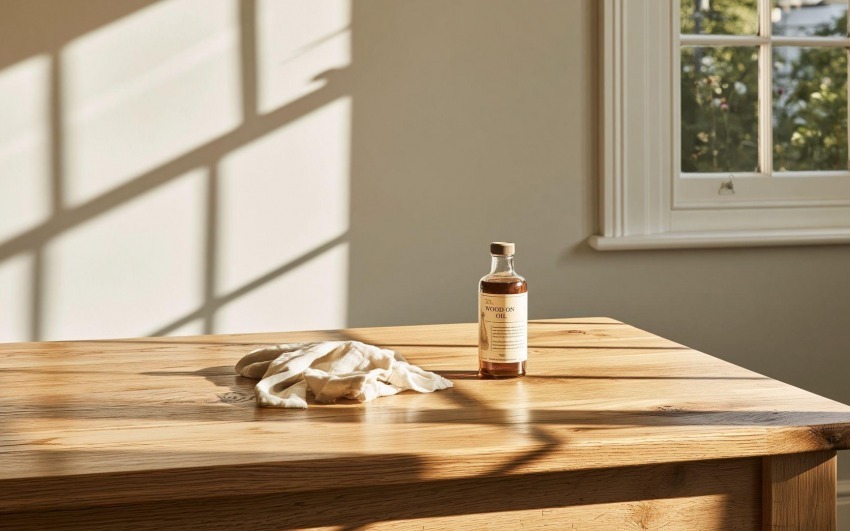
- natural woods with non-glossy finishes
- dense textiles (wool, raw linen, bouclé)
- textured plasters
- stone with depth and grain
- soft-touch elements
The brain associates these materials with safety, warmth, and humanity. That’s not poetry — it’s perception.
_d3f09da62b_.jpg)
AI Generated Content
Order doesn’t mean emptiness — it means legibility
Another key point: order is not the absence of objects. It’s the reduction of cognitive effort.
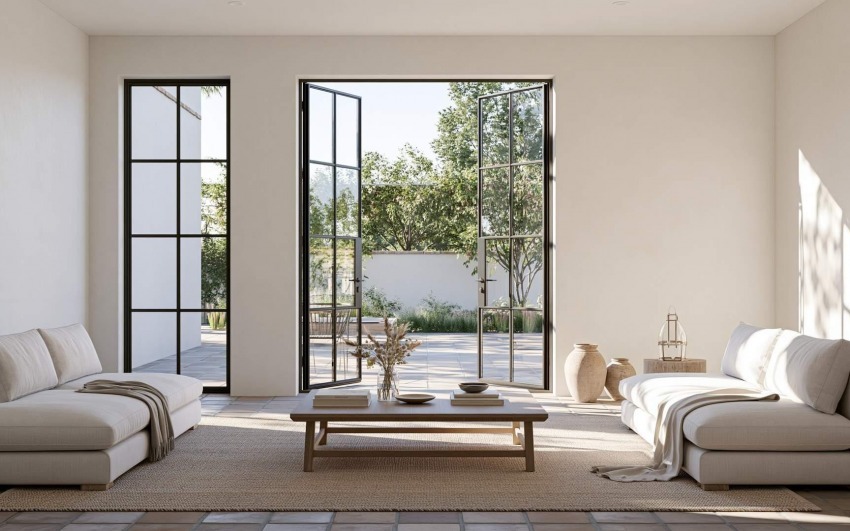
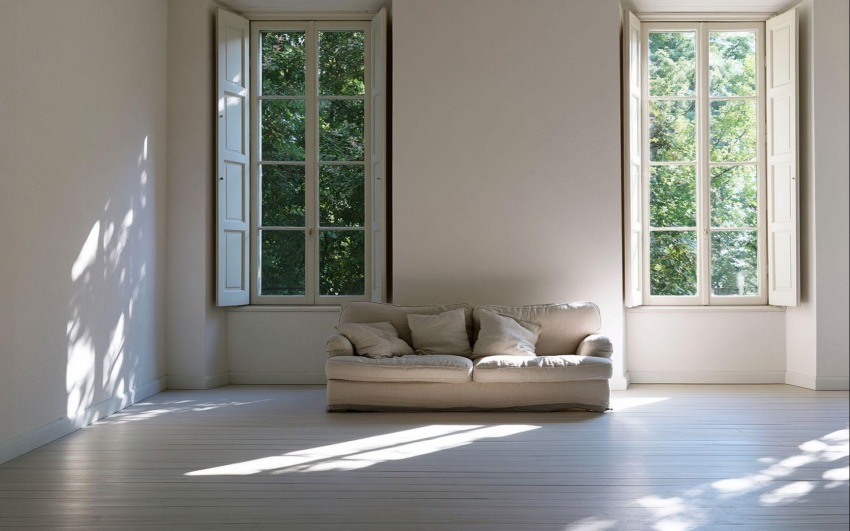
A home becomes tiring when the eye must constantly adjust: too many shapes, too many lines, too much micro-information. You don’t need a museum-like minimalist home. You need a readable one.
The principle is simple:
fewer objects competing, more objects collaborating.
Clutter isn’t just visual. It’s a demand for attention. And attention is the rarest currency.
_25a6481fa5_.jpg)
AI Generated Content
A practical checklist: designing a home that doesn’t tire you
Here’s a concrete checklist — still editorial, not a TikTok tutorial.
1) Layered lighting
- eliminate the single main light
- add lower and lateral light points
- favor indirect lighting
- create at least two moods: active and evening
2) Low-saturation palettes
- dusty tones over loud colors
- avoid harsh contrasts
- work with nuance (sand, clay, taupe, sage)
3) Matte and tactile surfaces
- reduce glossy finishes
- add textiles: heavy curtains, rugs, cushions
- choose visually absorbing textures
4) Acoustic comfort
- high-density rugs
- curtains and textile panels
- bookshelves and solid elements to break echoes
- avoid overly empty rooms with hard surfaces
5) Soft transitions
- not everything needs to be open-plan
- create thresholds (panels, rugs, material shifts)
- use curves and full volumes to soften sharpness
6) Fewer focal points
- a room doesn’t need to communicate ten things
- choose one center per space (light, artwork, material)
- let everything else support it
_50f23b17e8_.jpg)
AI Generated Content
The home as regulator, not as performance
Neuro-Interior Design is an intelligent response to our time. In a world that constantly demands attention, the home must become the space that gives it back.
This isn’t interior design that’s more beautiful.
It’s interior design that’s more human.
And in 2026, this may be the true evolution of luxury: not to impress, but to support.
If you want to explore this perspective further, read also The Aesthetics of Ritual: How Design Shapes Everyday Habits .
Discover more from Novamobili , where modular systems and tailored solutions support contemporary living.
_14077b47db_23.jpg)
Interior Designer since 1985
CEO & Founder, Italian Design in the World