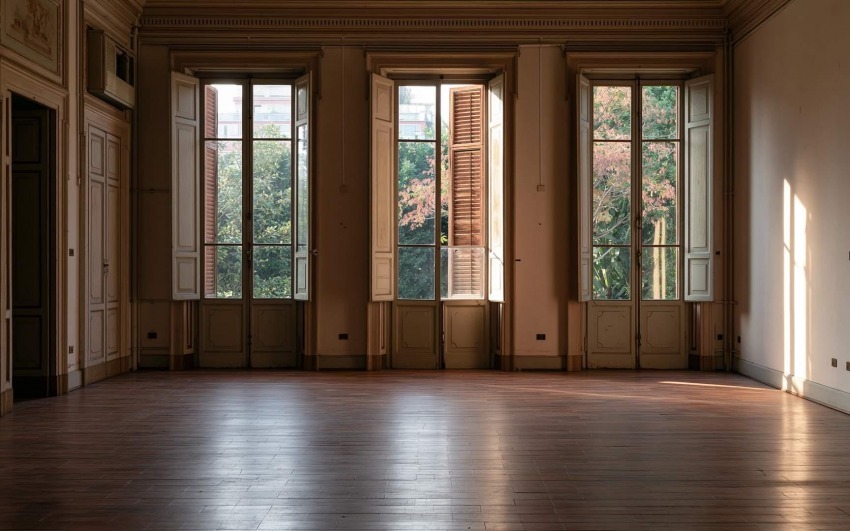
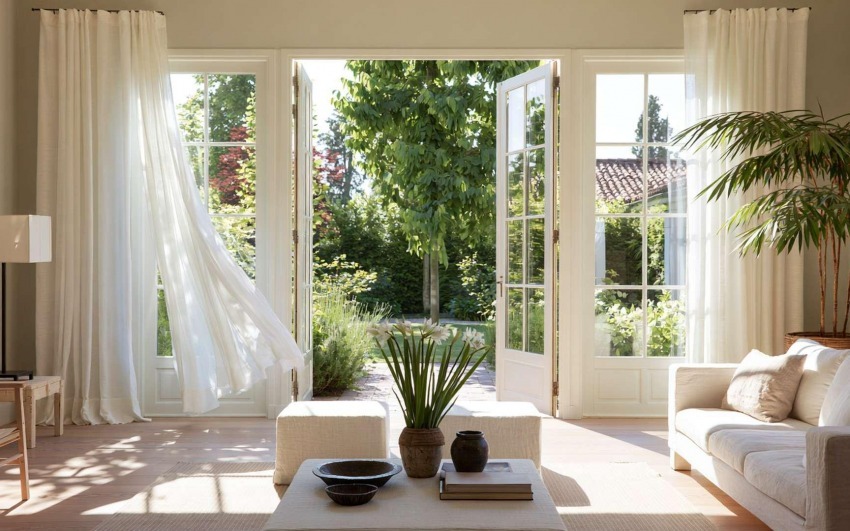
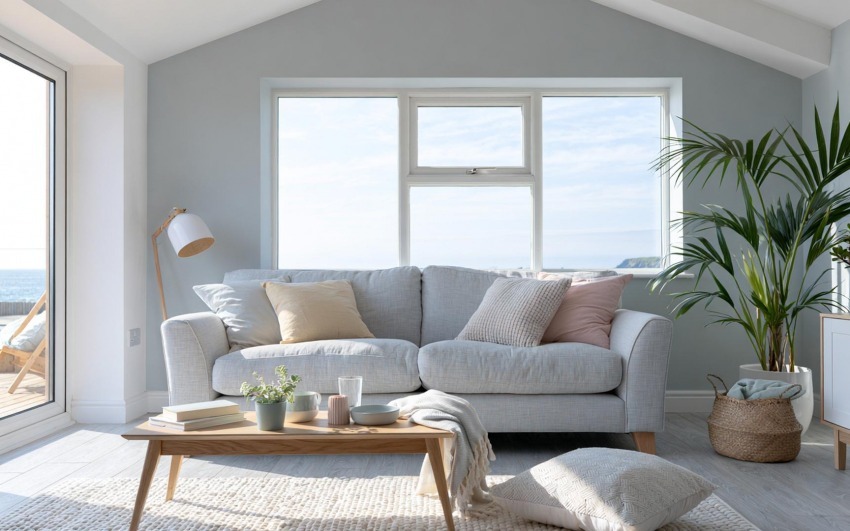
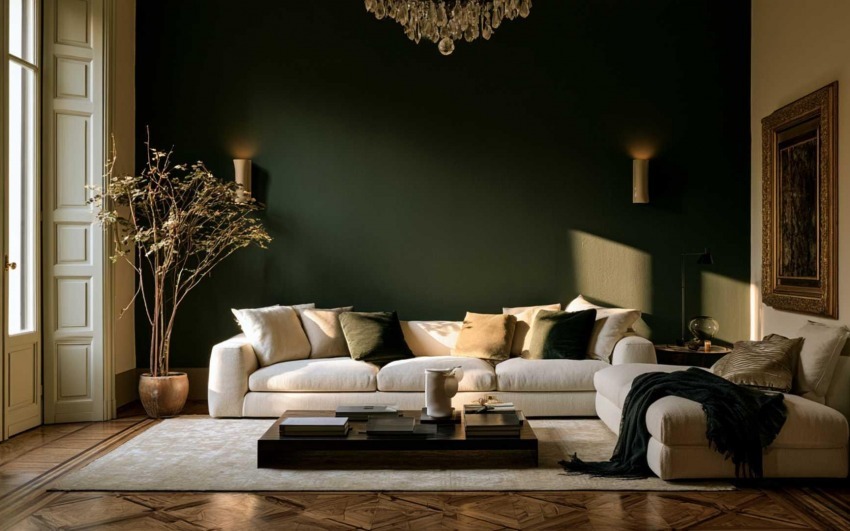
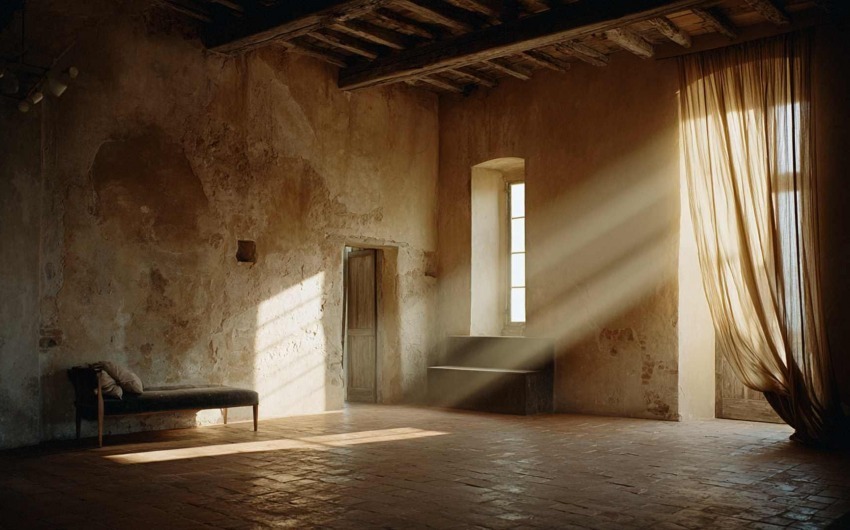
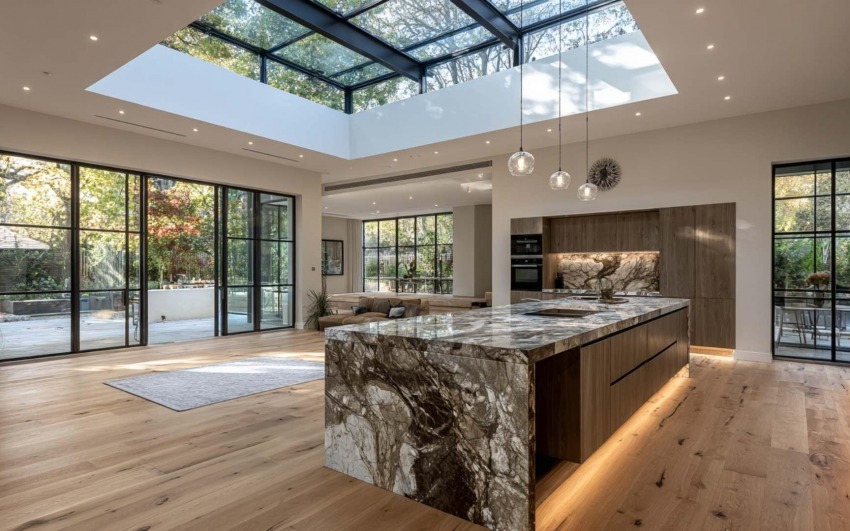
This is not nostalgia. It is a new architectural grammar.
Curves as emotional architecture
Curved forms are not decorative flourishes but spatial gestures. They guide movement, soften transitions, and create a sense of welcome. It is a “human” geometry, because it echoes what we find in nature: the slope of a hill, the flow of water, the profile of a polished stone.
In contemporary homes, curves soften the rigidity of minimalism and introduce a feeling of visual continuity.
AI Generated Content
_4d17d43859_.jpg)
AI Generated Content
_596e0884b0_.jpg)
AI Generated Content
Contemporary arches: connecting, not decorating
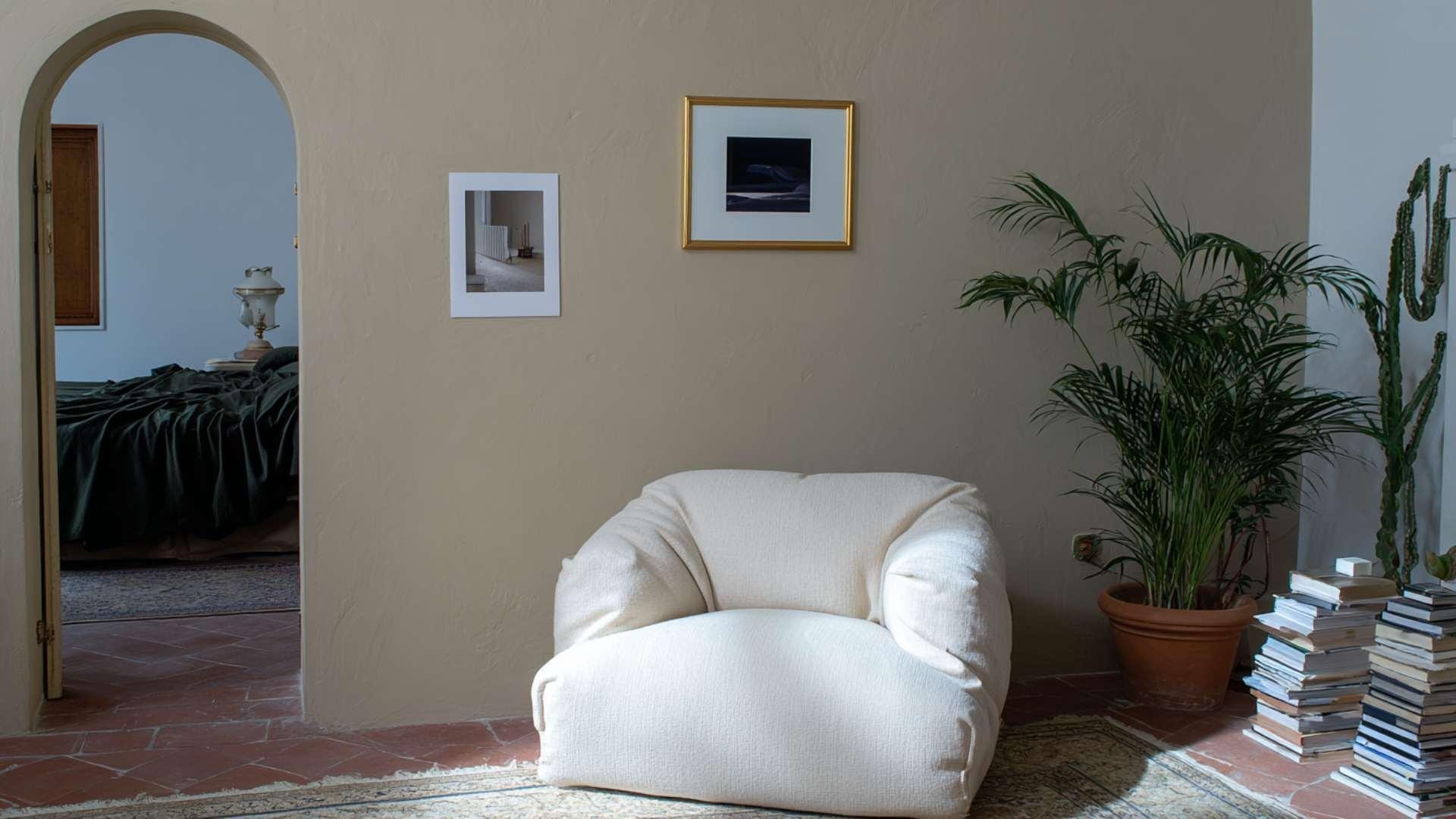
Today’s arch is never ornamental. It acts as a soft threshold: it connects rooms, expands perception, and creates rhythm. Architects use it to give a narrative direction to the space, as if each passage were a change of chapter.
_0907cf975b_.jpg)
AI Generated Content
_e2202d2a89_.jpg)
AI Generated Content
Generous volumes, refined details
The new aesthetic thrives on calibrated contrast:
- bold shapes in sofas and armchairs,
- enveloping wall claddings,
- thick, sculptural volumes,
- balanced by thin metal profiles, satin finishes, and light vertical accents.
It’s a balance designed to make the body feel at home: softened, protected, immersed.
_8dead59f34_.jpg)
AI Generated Content
A new grammar of living
This trend isn’t meant to impress, but to rebuild a more empathetic relationship with space. Curves speak of calm. Arches speak of continuity. Full volumes speak of presence.
These forms bring back a more human dimension — far from perfect staging and closer to real needs.
_7373bc624e_.jpg)
AI Generated Content
_14077b47db_23.jpg)