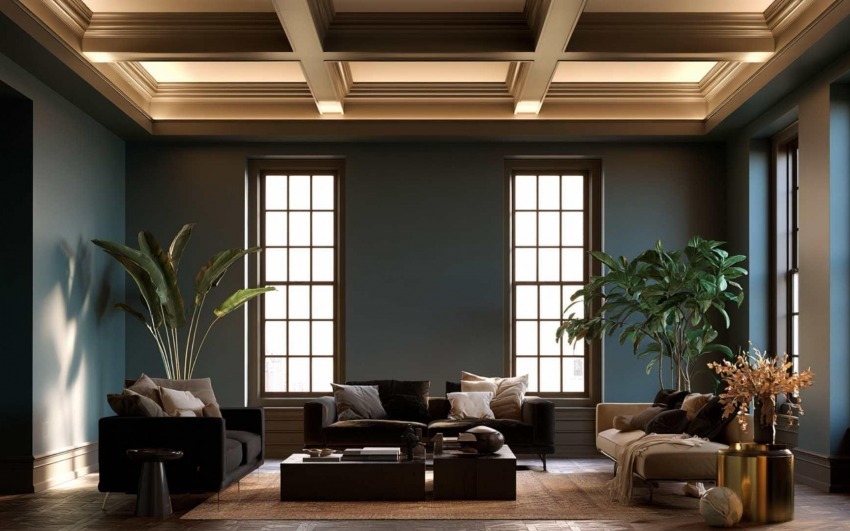
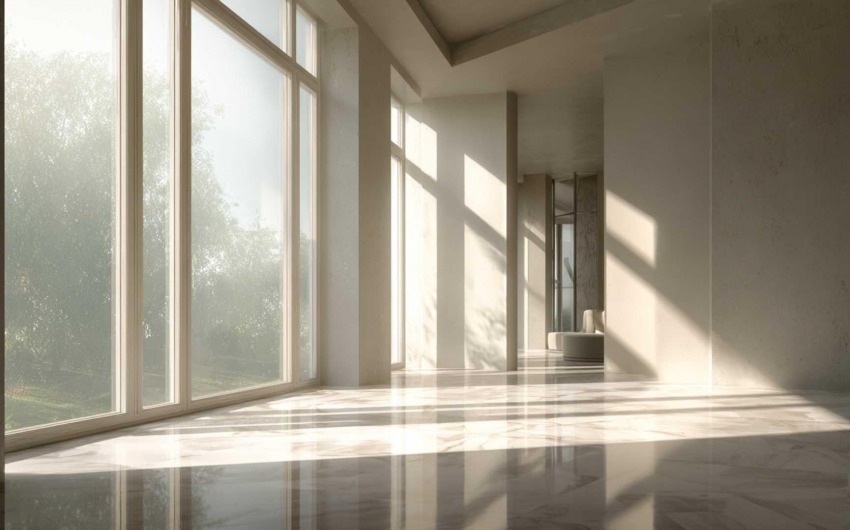
For years, interior design pursued a luminous ideal: bright spaces, white walls, clean surfaces, uniform light. The goal was clear — to amplify, to open up, to “make things feel larger.” Light became synonymous with modernity. And white, its official language.
Today, however, this grammar is shifting. Not because brightness is no longer desirable, but because it has been used as a universal solution. And like all universal solutions, it has begun to produce interiors that look correct but feel emotionally flat.
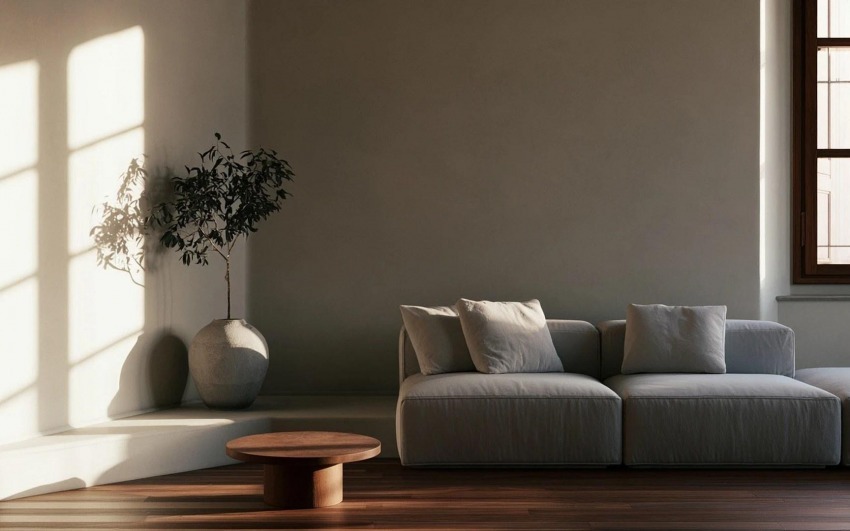
In 2026, a new paradigm emerges: light should not erase shadows. It should dialogue with them. Shadows are not a flaw. They are narrative material. They are depth. They are intimacy.
It is a cultural shift before it is an aesthetic one: from the “perfect” home to the “lived” home. From a home meant to be seen to a home meant to be felt.
AI Generated Content
When Uniform Light Becomes Noise
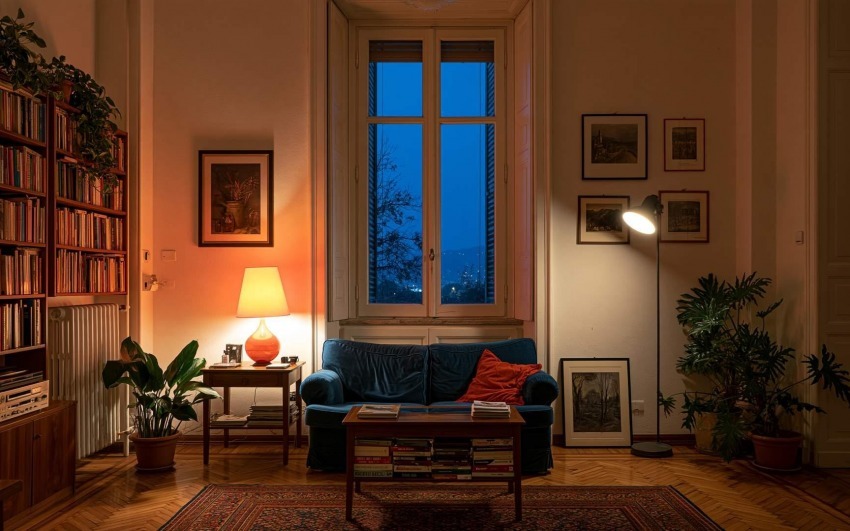
When poorly designed, light does not illuminate — it invades. Many contemporary interiors suffer from excessive brightness: central ceiling fixtures that flatten everything, spotlights everywhere, cold LEDs that eliminate nuance.
The result is a home that always feels in “day mode.” And this comes at a cost: the mind does not relax, the body does not switch off, domestic time loses rhythm.
Because light is not just a technical condition. It is a biological signal. If it is always full, always bright, always the same, the brain interprets the environment as constantly active.
It is the opposite of a refuge home.
_d61dce798d_.jpg)
AI Generated Content
The Return of Shadows: The Home as an Inner Landscape
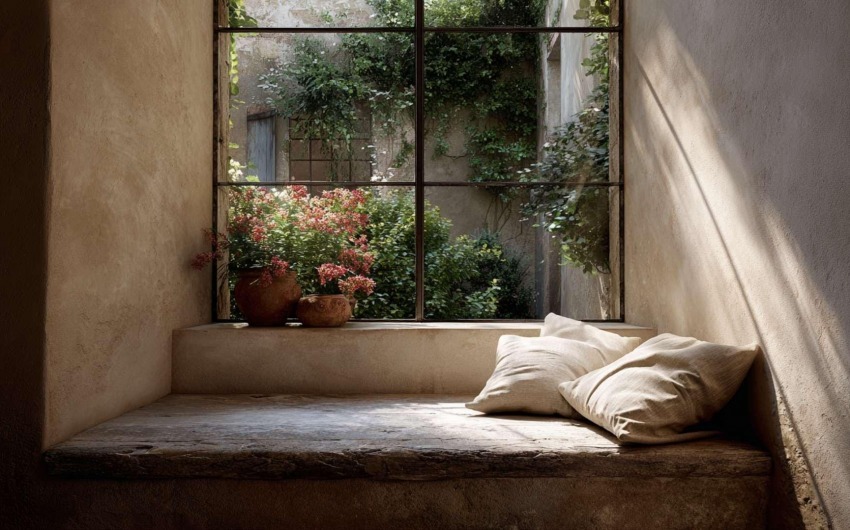
Shadows have returned because we have stopped trying to control everything. In contemporary European design, a desire for depth is emerging: spaces that do not reveal everything immediately, that are not “readable in a second,” that require time.
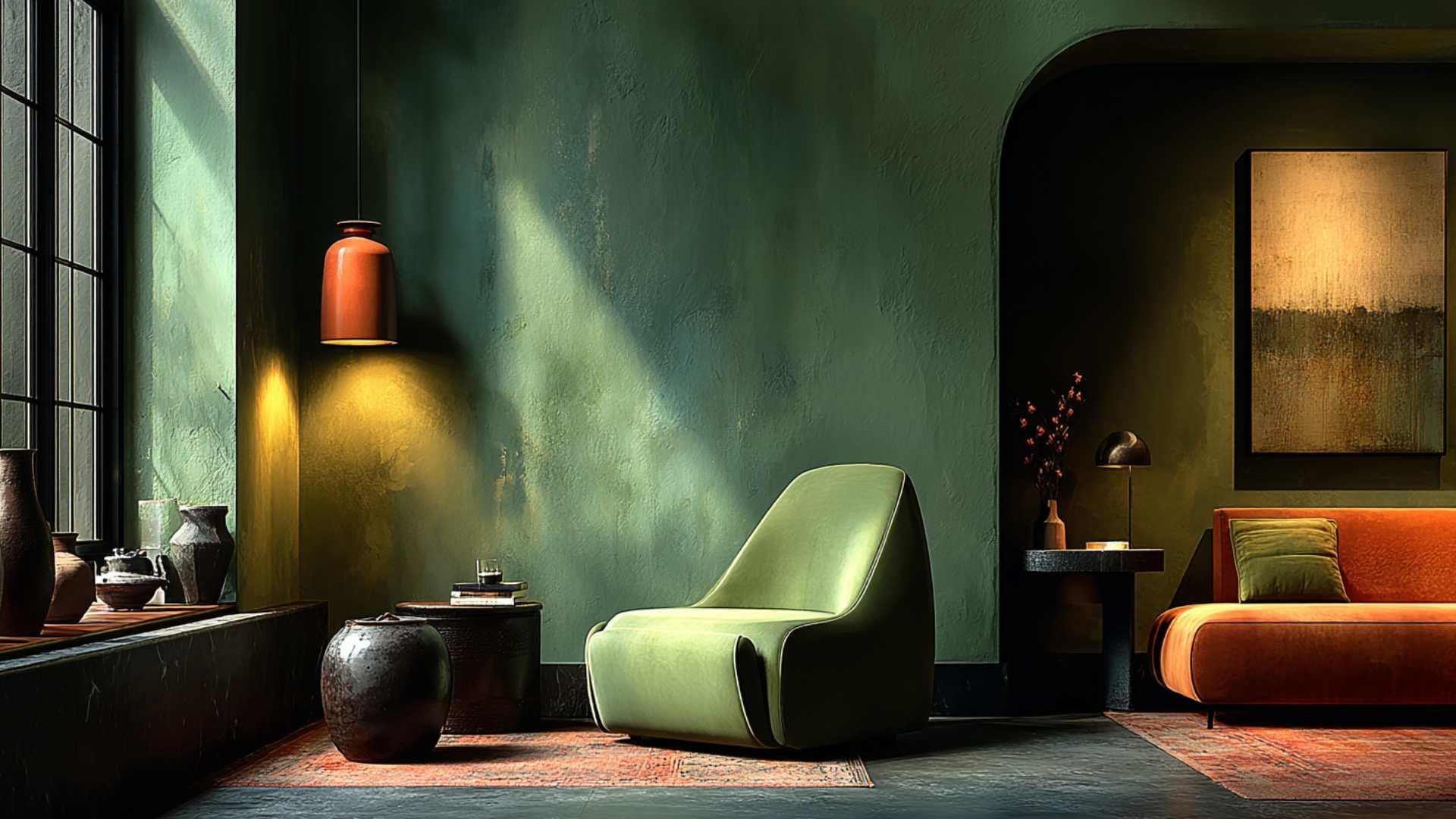
A space with shadows is not dark. It is layered. It creates zones. It protects. It builds emotional hierarchies. It allows the body to choose where to be.
The home becomes more like a landscape:
- full light in certain areas,
- soft shadow in others,
- textures that capture and release brightness,
- corners that do not demand attention but offer quiet.
It is a home that does not display. It suggests.
_77e00f4927_.jpg)
AI Generated Content
Imperfect Light: True Sophistication
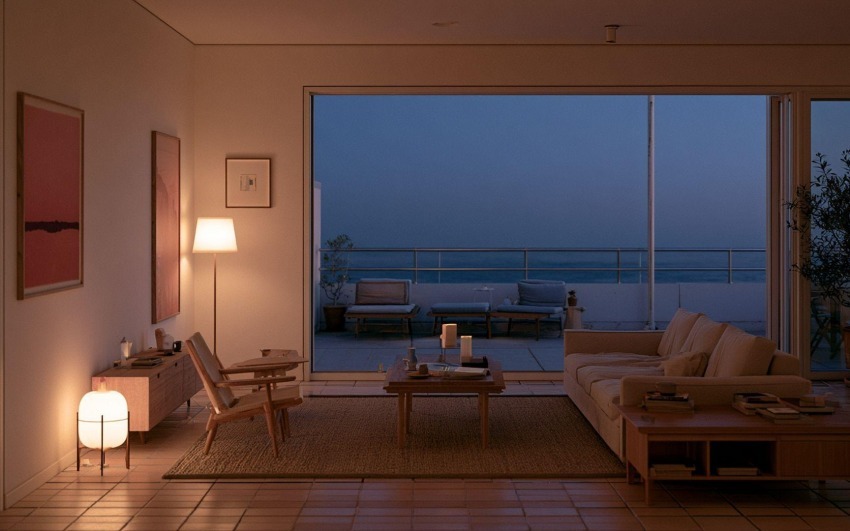
In design language, “perfect” often means sterile. Truly sophisticated light, instead, is imperfect: lateral, partial, warm, often hidden.
Imperfect light:
- does not illuminate everything,
- does not eliminate contrast,
- does not flatten surfaces,
- creates presence.
It feels natural even when it is not — like sunset light, light filtered through a curtain, light bouncing off a matte wall.
In 2026, this becomes the new idea of luxury: lighting that does not showcase technology, but builds atmosphere.
_b7979b4fad_.jpg)
AI Generated Content
Materials That “Hold” the Light
The return of shadows is also about materials. Because shadows can only be seen if they have something to rest on.
That is why surfaces capable of absorbing and modulating light are returning:
- mineral plasters and lime finishes,
- matte stone,
- dark or oiled woods,
- heavy textiles,
- satin metals.
Light does not bounce aggressively: it glides, softens, settles. The result is a home that feels more cinematic, more tactile, more calm.
_31cfd0c106_.jpg)
AI Generated Content
How to Design Light for Living, Not for Showrooms
Here we reach the practical part — but with style: not “place a lamp here,” but principles to follow.
1) Stop Lighting Everything
A home is not an office. Choose what should emerge and what can remain quiet.
2) Create Light Layers
- soft ambient base (diffused),
- accent points (warm highlights),
- functional light only where needed (kitchen, bathroom).
3) Prefer Lateral Light
Wall lights, floor lamps, low light sources: more intimate, more human.
4) Use Light as a Threshold
A shift in lighting can define a transition better than a wall: living/relax, entrance/night area.
5) Design for the Evening
Serious design reveals itself at night. If a home works only during the day, it is incomplete.
_9bc7381f25_.jpg)
AI Generated Content
Conclusion: After White, Depth
White will not disappear. But it will lose its monopoly. In 2026, the home returns to being an emotional environment, not a surface to optimize.
The new era of shadows is not a return to the past. It is a return to human complexity: intimacy, protection, rhythm.
Because a home does not need to be bright all the time. It needs to be real.
_14077b47db_23.jpg)