5/22/2026
I — Density and breath
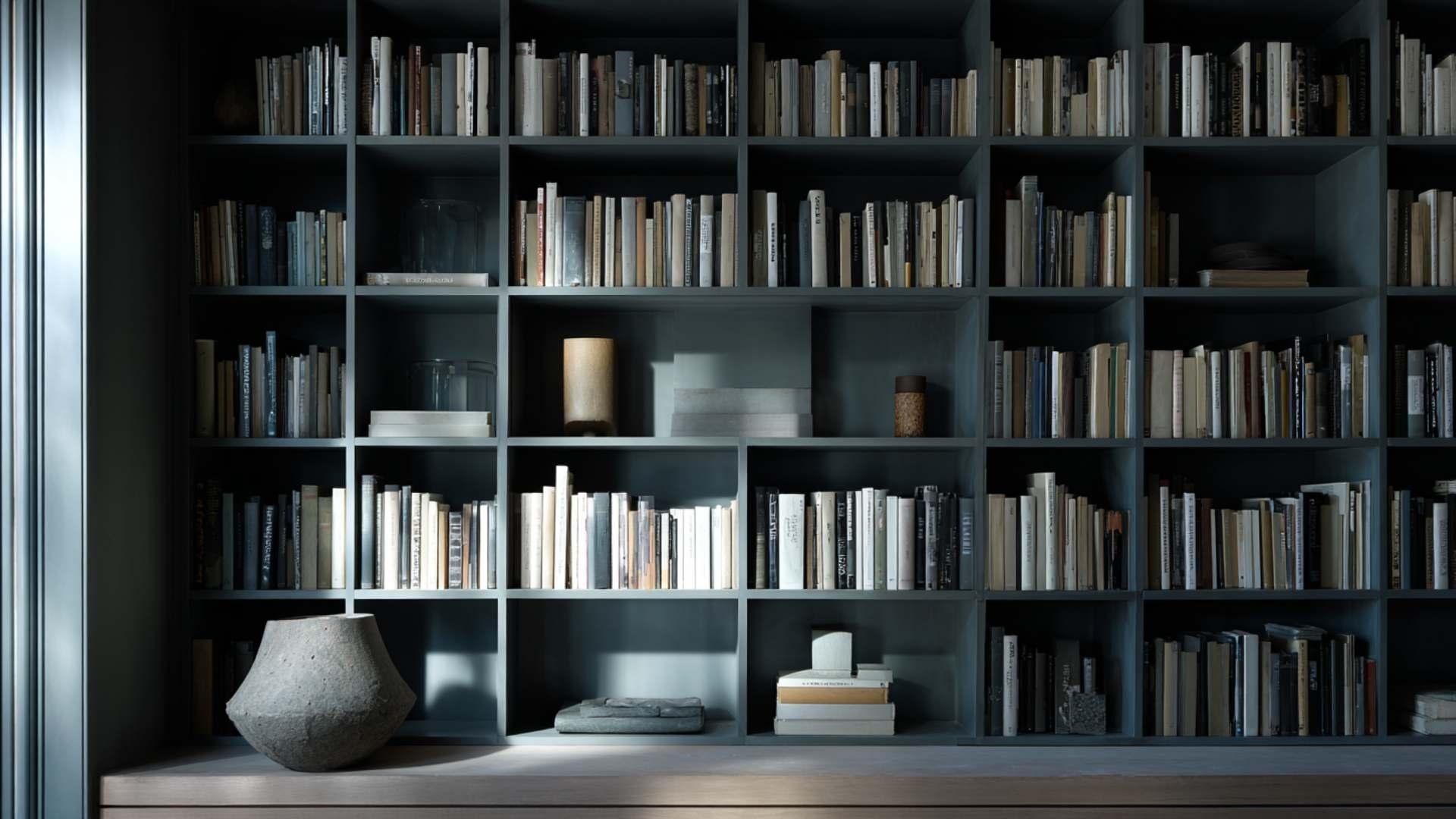
A wall of books isn't fill-in: it's a vertical landscape with its own climate.
Cramming too many identical spines, ruler-straight, produces a "catalogue wall". Alternating heights, gaps, objects that break the rhythm (a bust, a ceramic, a narrow frame) restores breath. A library conceived as thought accepts emptiness as part of the argument — like an essay that needs punctuation and line breaks.
AI Generated Content
II — Order without drill
Spine colour, theme, author: any criterion is valid if chosen, not endured.
Pure alphabetical order belongs in an office; at home, often not. Grouping by affinity (travel, contemporary fiction, reference that keeps returning) builds a mental map for whoever lives there. What matters is that the rule is shared with the people who use the room — otherwise the shelves become a passive message, not a dialogue.
_d57eee0fbd_.jpg)
AI Generated Content
III — Oblique light
Real reading asks for lateral shadow, not only a spotlight raining on spines.
A tall floor lamp, a low wall washer, a window that slices the wall diagonally: solutions that make books work even when switched off. Designing a library without designing reading light means confusing container and content. The joinery is frame; the scene is the body that reads.
_09a5eac57b_.jpg)
AI Generated Content
IV — What remains when you remove half the books
Domestic editorial care: fewer titles, more presence.
Editing down isn't snobbery: it makes room for the editions that matter, the beautiful covers, the books you return to. A "slimmed" library often tells more than a wall of impulse buys. It's the same principle as quiet luxury: don't display everything; display what holds a life.
_18c29b1903_.jpg)
AI Generated Content
In a showroom, a library doesn't sell books: it sells the pleasure of a wall that supports a mind. An IDW project can gauge shelves, thicknesses, loads — but the real measure is this: how much intellectual life that wall carries without collapsing under the weight of appearances.
Further reading
On the IDW blog: Choose the bookcase to furnish or divide a room — materials, modularity and compositions to find the right shelving for every space.
Partner: Pianca — Italian-designed day zone storage and bookcases: modular systems, quality finishes and tailored solutions for a book wall built to last.
_14077b47db_23.jpg)
Interior Designer since 1985
CEO & Founder, Italian Design in the World