8/29/2025
Let’s explore 5 perfect plant choices for sunny balconies and terraces — with stylish ideas to match them with furniture and accessories.
1. Bougainvillea
Guaranteed wow effect. This climbing plant with bright blooms (pink, fuchsia, purple, or orange) is ideal for covering walls, railings, or pergolas.
Decor tip: pair it with wrought iron structures or hanging pots for a Mediterranean vibe.
_134cd414c1_.jpg)
AI Generated Content
_c8c5d74e6c_.jpg)
AI Generated Content
2. Lavender
Fragrant, tough, and bee-friendly. Lavender thrives in direct sunlight and requires minimal watering.
Decor tip: plant it in large terracotta pots or rustic wooden boxes for a charming country look.
_41e201c360_.jpg)
AI Generated Content
3. Dwarf Pittosporum
A small evergreen shrub, perfect for creating green dividers or potted hedges. Glossy leaves, fragrant flowers, and very low maintenance.
Decor tip: use it as a visual border around your terrace lounge area.
_9c6cc9b9a7_.jpg)
AI Generated Content
4. Sedum and Succulents
Among the most sun- and heat-resistant plants. They require very little water and add a bold, modern touch.
Decor tip: play with designer pots, stands, and vertical arrangements to create structured mini gardens.
_e9003f188c_.jpg)
AI Generated Content
5. Plumbago (Blue Jasmine)
Blooms all summer long with delicate pale-blue flowers. Great for railings, trellises, and wall planters.
Decor tip: pair with neutral fabrics and natural materials for a cool, relaxing outdoor look.
_8cdb6daf16_.jpg)
AI Generated Content
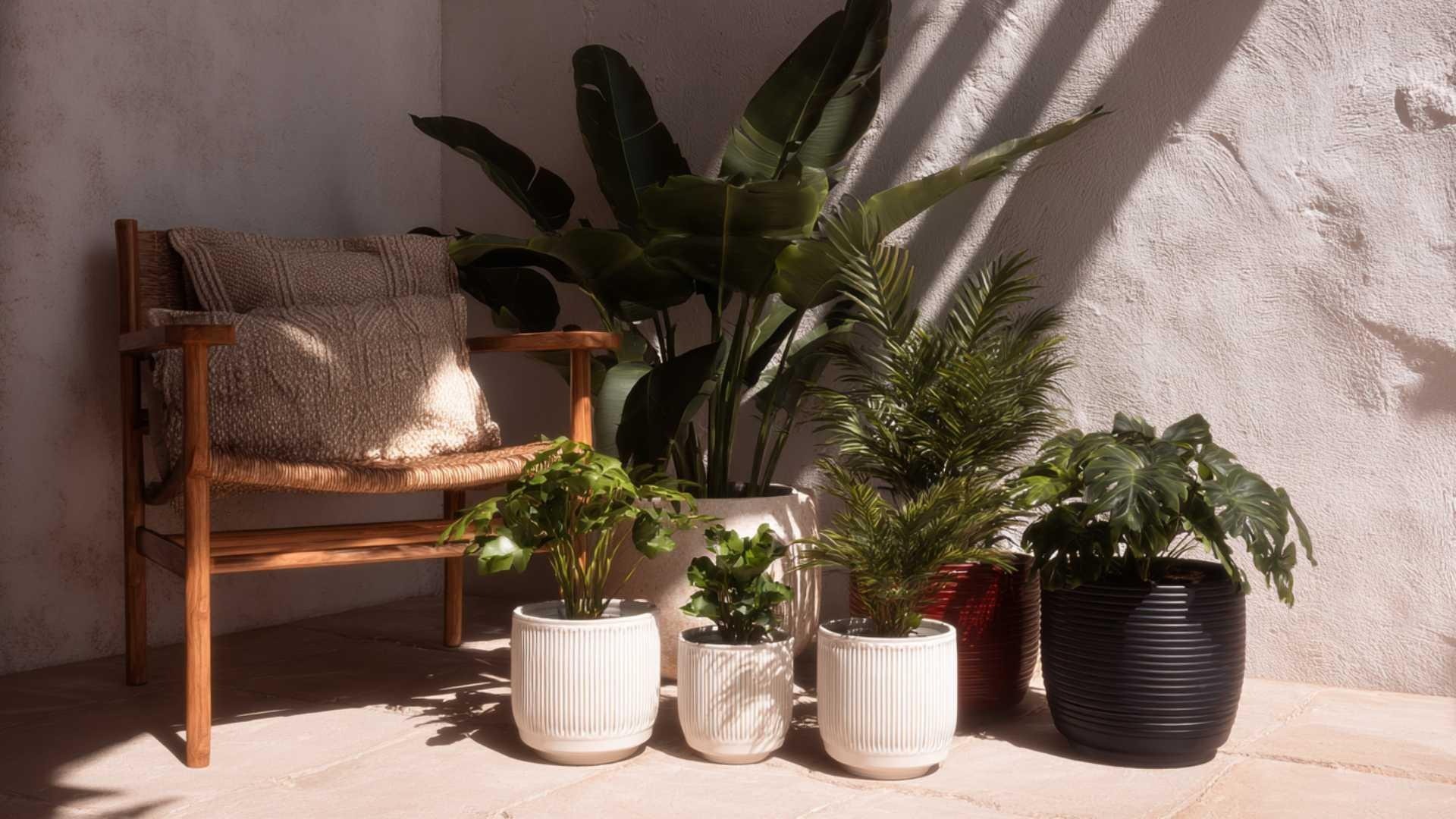
Bonus: Furniture and Pots to Enhance the Green
Plants are the stars — but the right accessories make them shine:
Choose glazed ceramic or decorative concrete planters.
Use vertical green walls if you’re short on floor space.
Add outdoor lighting to enjoy the ambiance at night too.
Looking for stylish and functional outdoor furniture? Check out S•CAB Design’s outdoor collection—durable, designer furnishings ideal for any outdoor lounge → S•CAB outdoor furniture
Or explore creative ideas to design your perfect balcony or terrace lounge in our article: Outdoor Lounge Corners → Outdoor Lounge Corners
_ecbde4b9b3_.jpg)
AI Generated Content
AI Generated Content
Decorating balconies and terraces with the right greenery isn’t just a style choice — it’s about well-being, too. Beautiful, heat-tolerant plants are the perfect allies to turn any outdoor space into your personal slice of summer paradise.
_14077b47db_23.jpg)
Interior Designer since 1985
CEO & Founder, Italian Design in the World