4/03/2026
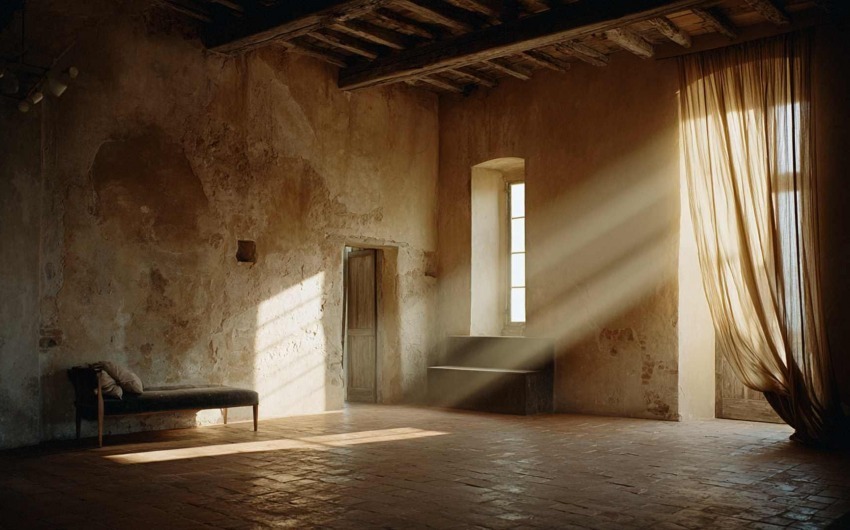
Circulation is not "lost space" to claw back for the living room. It is time made spatial: the rhythm with which the body crosses the home. When we treat it as leftover, we get correct plans and flat experience. When we draw it, the house stops being a sequence of boxes and becomes a sequence of small expectations — like walking a city that changes scale, not only façade.
What the rendering leaves out
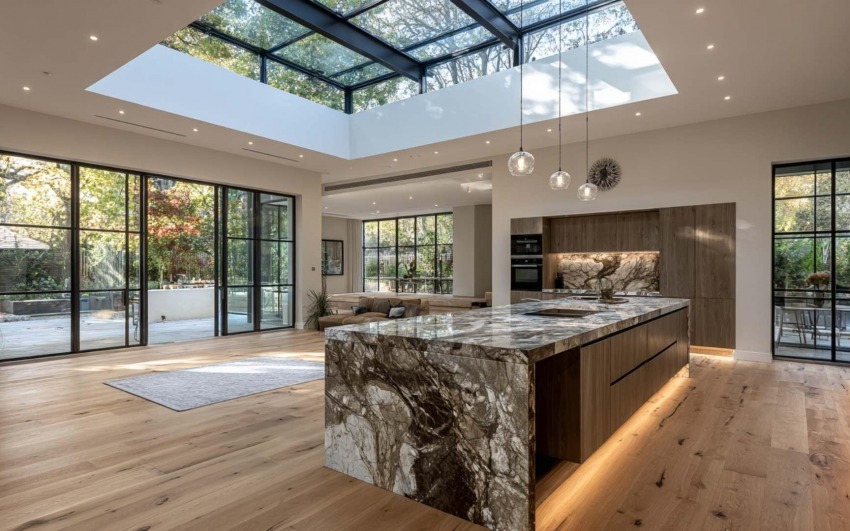
Seductive visuals almost always omit the corridor because it does not "sell" at first glance. Yet that is where you decide whether a home has memory or is only a container of functions. A well-designed vestibule is not a junction between doors: it is where you feel you are about to change context — public to private, day to night, kitchen to sleeping zone. Without that perceived threshold, even beautiful rooms risk feeling like disconnected islands, linked only by numbers on a plan.
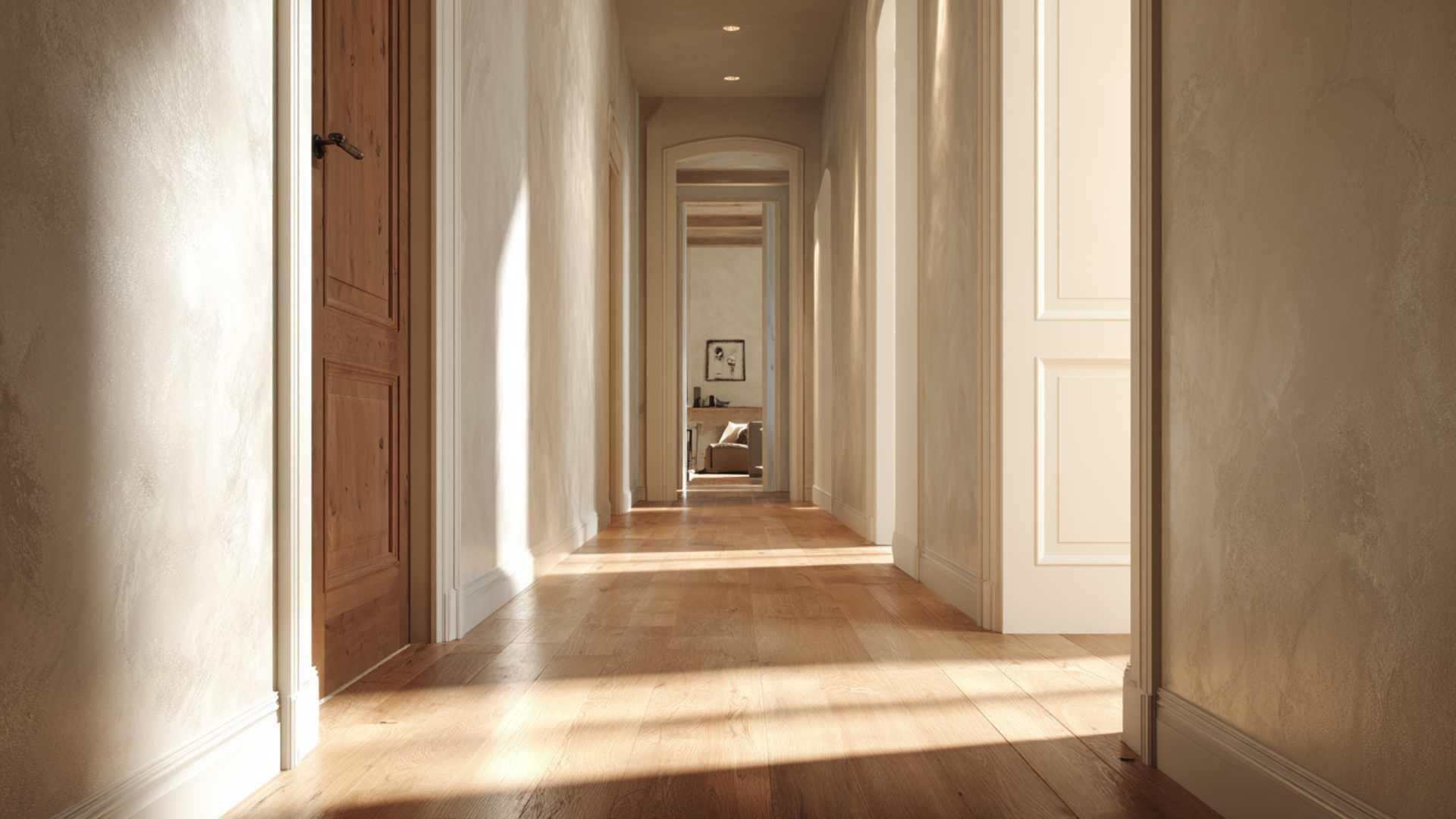
This does not mean widening passages at all costs. It means quality of passage: a niche, a readable floor change, a window even tall and narrow that brings grazing light, a slim piece of storage that defines without blocking. A long corridor can become a domestic gallery — art, texture, side light — instead of an anonymous tunnel. A short one can work as a psychological antechamber, not a hole.
AI Generated Content
When passage becomes time
The useful question is not "how wide?" but what should happen here before I open the next door. Calm? Pace? A brief pause? A small visual surprise? A home that answers that has a different personality from one that only answers "where does the sofa go".
Sometimes the passage should not be neutral: a slight level shift, a ceiling slightly lower or higher, a finish that runs from floor to wall with continuity — signals the body reads before the mind. No scenery needed: tactile and light coherence that do not demand obsessive upkeep.
_3391f37d12_.jpg)
AI Generated Content
Light, matter, height: practical tools
Where possible, natural light — filtered or indirect — strips the corridor of "service zone" mood. Artificial lighting should be layered: general, wall-mounted, perhaps a point that grazes a texture. One central downlight, by office habit, flattens everything at every hour.
Materials matter as much as metres: warm wood, living plaster, matte resin soften the hospital effect. Designers often underestimate how much an absorbent material — acoustically too — makes a narrow space tolerable. A corridor is not only what you see: it is what you hear when you speak in it.
_aa27ca8039_.jpg)
AI Generated Content
The vestibule as a real threshold
The vestibule — when it exists — is often the only place where the home grants a full pause between "outside" and "inside". A low piece for keys, a mirror that is not only functional, light that is not only security: micro-choices that say who lives here and in what order they enter private life. Skipping them for planimetric haste means giving up one of the few moments architecture can still be kind.
Designing the rhythm of the home means accepting that not everything must be a "main room". Passages, when drawn, are often the smartest part of residential work: where the building stops showing off and starts walking with you — step by step, door by door.
_5ab0fe4b7d_.jpg)
AI Generated Content
Further reading
On the IDW blog: The End of the Open Space: The Return of Thresholds — why redrawing boundaries between spaces changes the way a home is lived.
Partner: Vesoi — design lighting to enhance every passage: wall lights, ceiling fixtures and tailored solutions for corridors and vestibules.
_14077b47db_23.jpg)
Interior Designer since 1985
CEO & Founder, Italian Design in the World