5/06/2022
MORE INNOVATIVE AND EFFICIENT HOUSEHOLD APPLIANCES
When you find yourself in the situation of having to buy a new appliance, it would be a good idea to evaluate; with attention to a valid energy class it would therefore be advisable to start from A + to go up, the higher the energy efficiency of the various appliances we have at home, the lower the electricity consumption will be.
Nevertheless, we can further limit consumption, with simple precautions, such as turning off the vacuum cleaner while you are elsewhere and avoiding, when not necessary, activating the "turbo" function.
Contrary to what one might think, one of the precautions to be taken to contain waste would be to avoid leaving electronic devices on standby, since they are still connected to the electricity grid and cause a load of power.
However, some appliances are always in operation, such as the refrigerator: in this case, we can try to limit costs with some small precautions, for example avoiding opening and closing it continuously, thus forcing the compressor to take care of cooling the unit again. environment, thus wasting energy. Among other things, the same mechanism is activated, in the same way, by inserting too much into the dishes.
NATURAL LIGHT AND LED BULBS
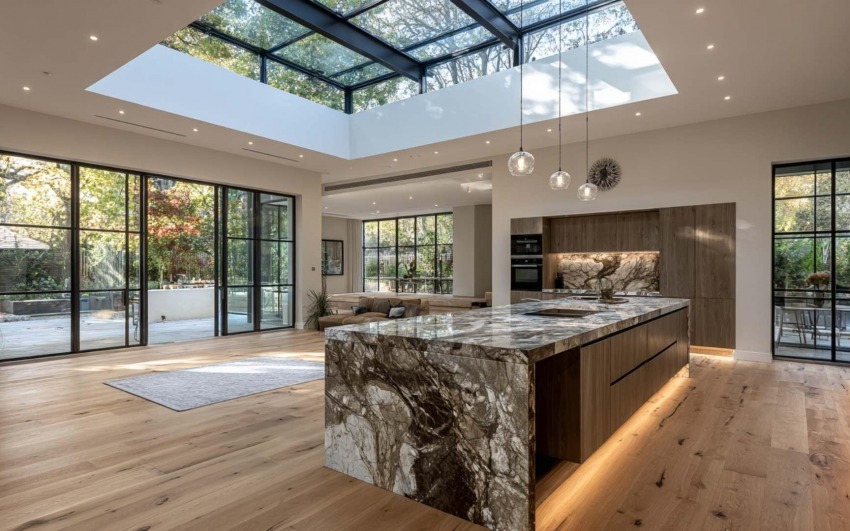
Who would not like to be able to avoid turning on the lights as much as possible, taking advantage of the solar points of light? Today, this goal can become a reality thanks to the science that designs the use of natural light in the home, that is lighting technology.
In fact, a good lighting project allows us to make the most of the use of sunlight indoors, during the day. Furthermore, for this reason, it is important to evaluate the location of the house and how much it is subject to sun exposure.
Once the sunlight has fallen and where it is not possible to exploit it even during the day, we are bound to the use of lighting. Since it represents a significant percentage of domestic energy costs, it would be advisable to prefer the use of the latest generation LED bulbs, making sure to save 90% more energy than traditional bulbs.
INNOVATIVE SOURCES
To use consumption and save on heating, thanks to continuous progress, today we have the possibility of evaluating different alternatives, such as the application of heat pumps or underfloor heating, powered by radiant panels.
One of the most important innovative sources is the installation of photovoltaic panels that capture solar energy and transform it into electricity, thus ensuring that we ourselves produce 90% of the energy we consume.
Furthermore, since the use of photovoltaic panels has a low environmental impact, this eco-sustainable choice allows us to have access to bonuses allocated by the Government, applicable for renovations and energy redevelopments.
THERMAL COAT
Finally, another way to save energy, which we strongly recommend, is the thermal insulation system (to date, one of the most effective tools in the building sector). It is nothing more than a system of thermal insulation of the internal envelope of buildings, which reduces the so-called "thermal bridges", in which heat dispersion occurs and humidity occurs.
It also guarantees thermal insulation, that is insulation from heat and cold, allowing the reduction of costs both for heating in winter and for the air conditioner in summer.
Although they are expensive interventions, they generate many benefits over time, including the revaluation of the property, remaining daily costs of consumption, the protection of the environment and as already mentioned, a series of concessions allocated to the State.
_14077b47db_23.jpg)
Interior Designer since 1985
CEO & Founder, Italian Design in the World