Multifunctional Furniture for Digital Nomads: How to Create Flexible and Functional Home Workspaces

11/15/2024

1. Foldable Desks and Transformable Furniture

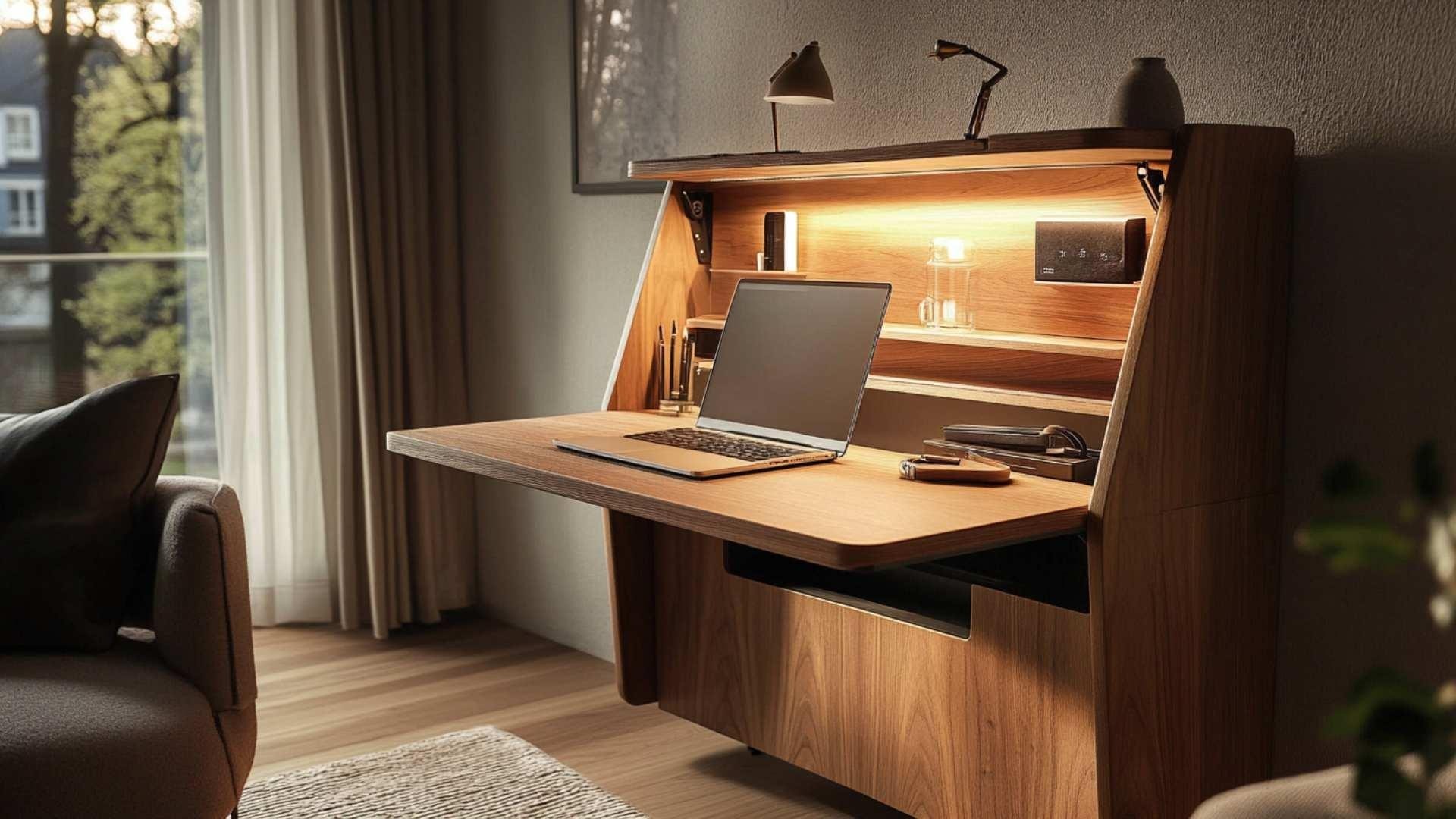
A desk is essential for any digital nomad. However, you don’t always want a work setup in plain sight when it’s time to relax. Foldable desks are a practical and stylish solution to this problem.

Foldaway desks: Perfect for small spaces, these desks can be opened when needed and folded away at the end of the day, transforming into a discreet piece of furniture.

Transformable furniture: Some furniture can serve multiple functions, such as dining tables that convert into desks or bookshelves that hide workspaces.

digital-nomads-interior_IDW-Italia-Prague-Biella


2. Multifunctional Beds and Sofas

For those working from home, having an area that serves both as a living room and a resting space can make all the difference. Multifunctional furniture like murphy beds or sofa beds are smart choices to maximize space without compromising style.

Vertical or horizontal murphy beds: During the day, these fold up against the wall, freeing up space for a work or relaxation area. At night, they easily fold down to provide a comfortable bed.

Modern sofa beds: In addition to offering a comfortable spot to relax, they can quickly transform into a guest bed, making the space more versatile.


digital-nomads-interior IDW-Italia-Prague-Biella


3. Hidden Storage Solutions

One of the challenges of working from home is keeping things organized. Fortunately, there are hidden storage solutions that help keep work materials stored away without encroaching on living space.

Under-bed or sofa drawers: Use the space under the bed or sofa to store documents, cables, and work equipment, keeping everything tidy and easily accessible.

Modular bookshelves and cabinets: Shelving units with closed and open modules can serve both as decorative pieces and storage, hiding clutter behind sleek doors.


digital-nomads-interior_IDW-Italia-Prague-Biella


4. Adjustable Tables

An adjustable-height table is one of the smartest investments for remote workers. It can easily transition from a sitting workstation to a standing one, improving comfort and productivity.

Electric adjustable tables: These tables allow you to alternate between sitting and standing with the touch of a button, promoting physical well-being for those who spend long hours at the computer.

Folding or extendable tables: Perfect for smaller homes, these tables can be extended when extra workspace is needed or folded away to free up space.


digital-nomads-interior_IDW-Italia-Prague-Biella


5. Separate Zones with Movable Walls or Dividers

If you live in an open-plan space and want to create a distinction between work and relaxation areas, movable walls or room dividers are the ideal solution.

Portable dividers: Decorative panels or screens that can be easily moved create a temporary separation between the office and living room.

Bookshelf dividers: These multifunctional pieces not only separate spaces but also provide extra room for decor and storage.


digital-nomads-interior_IDW-Italia-Prague-Biella


Multifunctional furniture offers smart and flexible solutions for remote workers, allowing you to optimize spaces without sacrificing style and comfort. With transformable furniture, foldaway desks, and hidden storage solutions, it’s possible to create an environment that suits the needs of digital nomads—efficient yet welcoming.


Cristiano Castaldi IDW Italia
Cristiano Castaldi

Interior Designer since 1985

CEO & Founder, Italian Design in the World
Related Articles

  • The Anti-Algorithm Home: Spaces That Aren’t Instagrammable (But Truly Livable)
    2/13/2026 The Anti-Algorithm Home: Spaces That Aren’t Instagrammable (But Truly Livable)

    For years, we designed homes as if they had to pass a constant visual exam: perfect light, perfect white, the right chair, the right vase. Interiors built to be photographed more than lived in.
Digital aesthetics — polished, minimal, hyper-ordered — entered interior design like an unspoken rule: if it isn’t “clean,” it isn’t beautiful; if it isn’t coherent, it isn’t successful; if it can’t be shown, it isn’t desirable.In 2026, this narrative is losing its power. Not because beauty matters less, but because beauty alone is no longer enough.
A new need is emerging: anti-algorithm interiors, spaces not designed for the shot, but for everyday life. Less performative homes, more real ones. Environments that don’t seek approval — they restore energy.This is not a return to chaos. It’s a return to meaning.

  • The End of the Open Space: The Return of Thresholds
    1/30/2026 The End of the Open Space: The Return of Thresholds

    For years, open-plan living symbolized contemporary domestic design: fluid, bright, without barriers.
A response to the desire for freedom, openness, and visual continuity.Today, that promise is being reconsidered.
In 2026, many projects mark a shift — not a rejection of open space, but its critical evolution. The return of thresholds.

  • Interiors That Age Well: Designing Spaces Beyond Trends
    1/23/2026 Interiors That Age Well: Designing Spaces Beyond Trends

    One of the most underestimated challenges in contemporary design is time.
Not the time required to design a space, but the time the space must endure: years of daily life, change, wear, and transformation.

  • Living as a Cultural Act: When the Home Becomes a Position
    1/09/2026 Living as a Cultural Act: When the Home Becomes a Position

    In recent years, the home has stopped being a simple functional container.
It has become an extension of how we think, how we experience time, and how we relate to the world. Living today is a cultural act — a conscious choice that reflects values, priorities, and pace of life. It’s no longer just about aesthetics. It’s about position.

  • The Aesthetics of Ritual: How Design Shapes Everyday Habits
    1/02/2026 The Aesthetics of Ritual: How Design Shapes Everyday Habits

    Homes have become more than places — they have become temporal landscapes.
Design is shifting from objects to gestures, from furniture to the choreography of daily life.

  • The Material of the Future: Ultra-Thin Surfaces and Advanced Finishes
    12/19/2025 The Material of the Future: Ultra-Thin Surfaces and Advanced Finishes

    Material innovation is reshaping interiors more deeply than any aesthetic trend.
The new frontier is not in bold colors or complex textures — it lies in technical surfaces that are thin yet strong, discreet yet expressive, silent yet high-performing.