2/25/2022
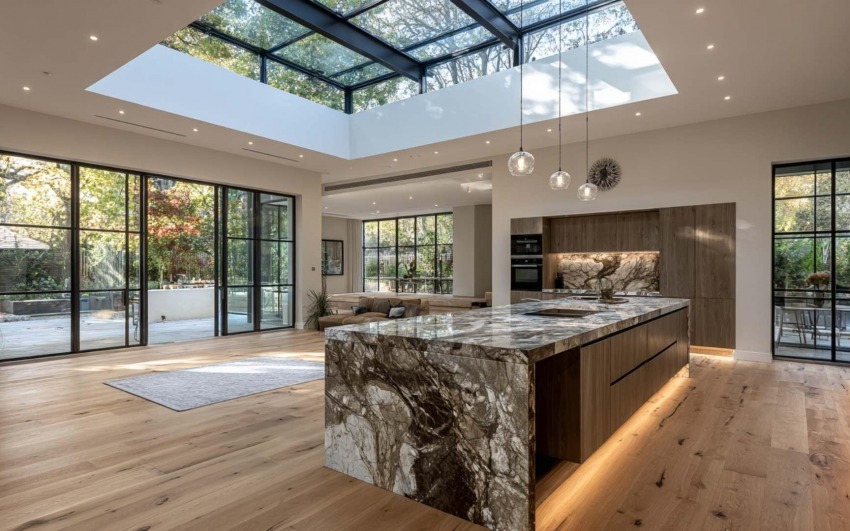
When you buy a house with all the rooms in a single environment or renovate an old apartment by eliminating any partition you find in our path, it is then useless to have to put up walls or plasterboard walls to go and re-delimit each area. In fact, there are other ways to separate rooms, even if only visually. Let's see them together:
Glass walls
Excellent idea whether installed on a fixed structure opening onto the other room or closed with a sliding door, the glass wall looks like a structure usually made of metal with transparent, smoked, satin or patterned glass


Bookshelf
The double-sided bookcase is perfect for delimiting one area from another, there are different sizes and styles but above all it allows you to divide the environment without weighing it down.


Floor
It does not physically divide the spaces but it is purely a visual matter. The floor that differs from one area to another, especially if accompanied by a false ceiling that follows the boundaries of the tiles, will give the idea of entering a completely different room.


Mobile
The last option, and also the simplest, is to arrange the furnishings in such a way as to perfectly fill the spaces and delimit the various areas, for example, a sofa with an island in the center of the room makes it clear what the living area is ( there are modular modular sofas to give the shape you want), or the boundaries of an extra large carpet under the table and chairs, suggests that this is the area used as a dining room, the arrangement of the furnishing accessories is crucial in the subdivision of the various rooms:


Interior Designer since 1985
CEO & Founder, Italian Design in the World
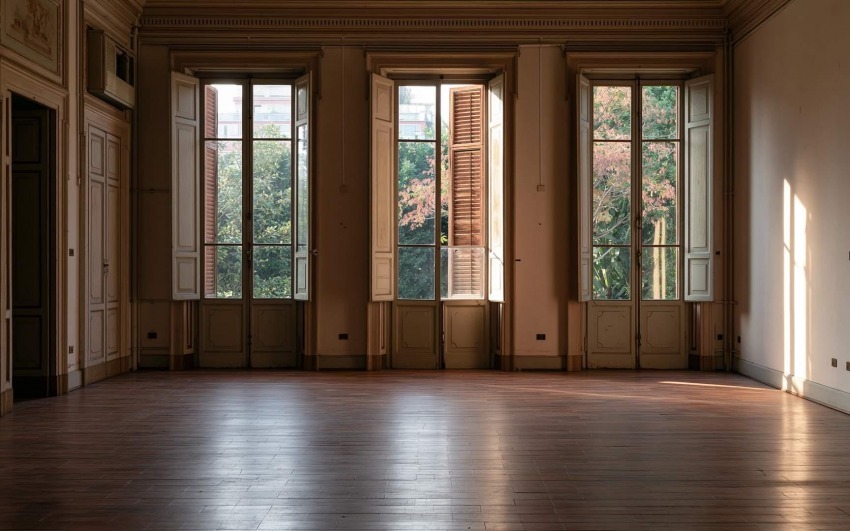
For years, we designed homes as if they had to pass a constant visual exam: perfect light, perfect white, the right chair, the right vase. Interiors built to be photographed more than lived in. Digital aesthetics — polished, minimal, hyper-ordered — entered interior design like an unspoken rule: if it isn’t “clean,” it isn’t beautiful; if it isn’t coherent, it isn’t successful; if it can’t be shown, it isn’t desirable.In 2026, this narrative is losing its power. Not because beauty matters less, but because beauty alone is no longer enough. A new need is emerging: anti-algorithm interiors, spaces not designed for the shot, but for everyday life. Less performative homes, more real ones. Environments that don’t seek approval — they restore energy.This is not a return to chaos. It’s a return to meaning.
For years, open-plan living symbolized contemporary domestic design: fluid, bright, without barriers. A response to the desire for freedom, openness, and visual continuity.Today, that promise is being reconsidered. In 2026, many projects mark a shift — not a rejection of open space, but its critical evolution. The return of thresholds.
One of the most underestimated challenges in contemporary design is time. Not the time required to design a space, but the time the space must endure: years of daily life, change, wear, and transformation.
In recent years, the home has stopped being a simple functional container. It has become an extension of how we think, how we experience time, and how we relate to the world. Living today is a cultural act — a conscious choice that reflects values, priorities, and pace of life. It’s no longer just about aesthetics. It’s about position.
Homes have become more than places — they have become temporal landscapes. Design is shifting from objects to gestures, from furniture to the choreography of daily life.
Material innovation is reshaping interiors more deeply than any aesthetic trend. The new frontier is not in bold colors or complex textures — it lies in technical surfaces that are thin yet strong, discreet yet expressive, silent yet high-performing.