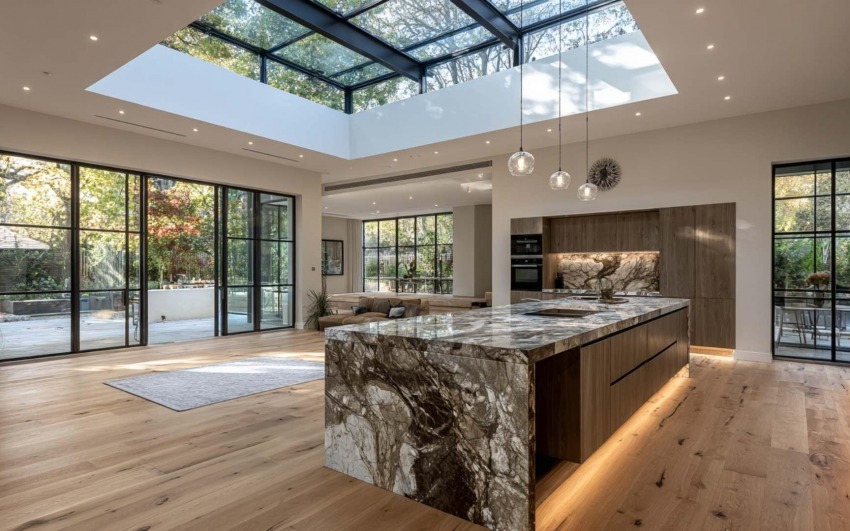
Home Automation and Smart Furnishing: Integrating Technology into Home Environments


5/30/2024

Home Control Systems: With home control systems, it's possible to manage and automate various functions of the home, such as lighting, climate control, and security, via smartphones or voice assistants.


domotica_IDW-Italia-Biella-Prague


Smart Appliances: Wi-Fi-enabled smart appliances allow you to control and monitor their operation remotely, optimizing energy consumption and simplifying household tasks.


domotica_IDW-Italia-Biella-Prague


Advanced Home Security: Advanced home security systems, such as surveillance cameras and alarm sensors, offer greater peace of mind and protection for the home and family, allowing you to monitor the home environment even when you're away.


domotica_IDW-Italia-Biella-Prague


Smart Lighting: Smart lighting solutions allow you to adjust the brightness and color of lights according to personal preferences and different needs, creating customized atmospheres for every moment of the day.


domotica_IDW-Italia-Biella-Prague


Integration with Existing Devices: You can integrate home automation technology with existing devices in the home, such as smart locks, electronic thermostats, and audio systems, to create an interconnected and easily controllable home ecosystem.


domotica_IDW-Italia-Biella-Prague


The integration of technology into home environments through home automation and smart furnishing is transforming the way we live and interact with our homes. With careful planning and consideration, it's possible to create a smart, efficient, and secure home environment that adapts to our needs and enhances the quality of daily life.


Cristiano Castaldi IDW Italia
Cristiano Castaldi

Interior Designer since 1985

CEO & Founder, Italian Design in the World
Related Articles

  • Honest Materials: The Aesthetics of Truth (and the End of “Fake Luxury”)
    2/27/2026 Honest Materials: The Aesthetics of Truth (and the End of “Fake Luxury”)

    For years, interior design has lived with a contradiction: an obsession with effect.
Marble-effect. Wood-effect. Metal-effect. Stone-effect.
A home that looks like something, rather than truly being something.

  • The Anti-Algorithm Home: Spaces That Aren’t Instagrammable (But Truly Livable)
    2/13/2026 The Anti-Algorithm Home: Spaces That Aren’t Instagrammable (But Truly Livable)

    For years, we designed homes as if they had to pass a constant visual exam: perfect light, perfect white, the right chair, the right vase. Interiors built to be photographed more than lived in.
Digital aesthetics — polished, minimal, hyper-ordered — entered interior design like an unspoken rule: if it isn’t “clean,” it isn’t beautiful; if it isn’t coherent, it isn’t successful; if it can’t be shown, it isn’t desirable.In 2026, this narrative is losing its power. Not because beauty matters less, but because beauty alone is no longer enough.
A new need is emerging: anti-algorithm interiors, spaces not designed for the shot, but for everyday life. Less performative homes, more real ones. Environments that don’t seek approval — they restore energy.This is not a return to chaos. It’s a return to meaning.

  • The End of the Open Space: The Return of Thresholds
    1/30/2026 The End of the Open Space: The Return of Thresholds

    For years, open-plan living symbolized contemporary domestic design: fluid, bright, without barriers.
A response to the desire for freedom, openness, and visual continuity.Today, that promise is being reconsidered.
In 2026, many projects mark a shift — not a rejection of open space, but its critical evolution. The return of thresholds.

  • Interiors That Age Well: Designing Spaces Beyond Trends
    1/23/2026 Interiors That Age Well: Designing Spaces Beyond Trends

    One of the most underestimated challenges in contemporary design is time.
Not the time required to design a space, but the time the space must endure: years of daily life, change, wear, and transformation.

  • Living as a Cultural Act: When the Home Becomes a Position
    1/09/2026 Living as a Cultural Act: When the Home Becomes a Position

    In recent years, the home has stopped being a simple functional container.
It has become an extension of how we think, how we experience time, and how we relate to the world. Living today is a cultural act — a conscious choice that reflects values, priorities, and pace of life. It’s no longer just about aesthetics. It’s about position.

  • The Aesthetics of Ritual: How Design Shapes Everyday Habits
    1/02/2026 The Aesthetics of Ritual: How Design Shapes Everyday Habits

    Homes have become more than places — they have become temporal landscapes.
Design is shifting from objects to gestures, from furniture to the choreography of daily life.