12/29/2023
Rethink Furniture Arrangement:
An effective way to renew your home is to rethink furniture arrangement. Experiment with new configurations to optimize space and create a more harmonious flow. Even a simple rearrangement of furniture can breathe new life into a room.


Update Wall Tones:
Wall color has a significant impact on a room's atmosphere. Consider updating wall tones with fresh and modern colors. Neutral tones like light gray, beige, or white create a versatile backdrop, while bold colors add personality and vitality.


Introduce Natural Elements:
Bring nature indoors by introducing natural elements. Indoor plants, fresh flowers, and wooden elements contribute to creating a fresh and lively space. Natural elements not only add beauty but also improve air quality and promote a sense of well-being.


Add Handcrafted Details:
Handcrafted items can add a personal and unique touch to your home. Look for handmade objects such as embroidered cushions, artisan ceramics, or local artwork. These handcrafted details add character and originality to spaces.
Renewed Lighting:
Lighting plays a crucial role in the look of a home. Renew your lighting with modern lamps and bright decorations. Experiment with different light sources to create different atmospheres in various areas of your home.


Create a Relaxation Zone:
Dedicate a specific space to relaxation, where you can disconnect and recharge. It could be a small reading corner with a cozy chair and a bookshelf or a nook with cushions and soft fabrics. This space will offer you a peaceful retreat within your home.

Personalize with Fabrics:
Fabrics can instantly transform the look of a room. Introduce new rugs, curtains, or cushions to add texture and color. Opt for high-quality fabrics with patterns that reflect your personal style.

Organize and Declutter:
The new year is also a perfect time for organization. Eliminate the unnecessary, organize spaces, and free yourself from what no longer serves a purpose. A tidy environment contributes to a clear and calm mind.

Photo and Art Gallery:
Create a gallery of photos and images that tell your story. Choose frames and creative arrangements to make this wall a significant and personalized focal point.

Experiment with Wall Art:
Wall art can transform a room remarkably. Consider adding a mural or decorated wall for a unique visual impact.


Whether you're looking for a drastic change or just small updates, these restyling ideas will help you start the new year with a home that reflects your style and aspirations.
Interior Designer since 1985
CEO & Founder, Italian Design in the World
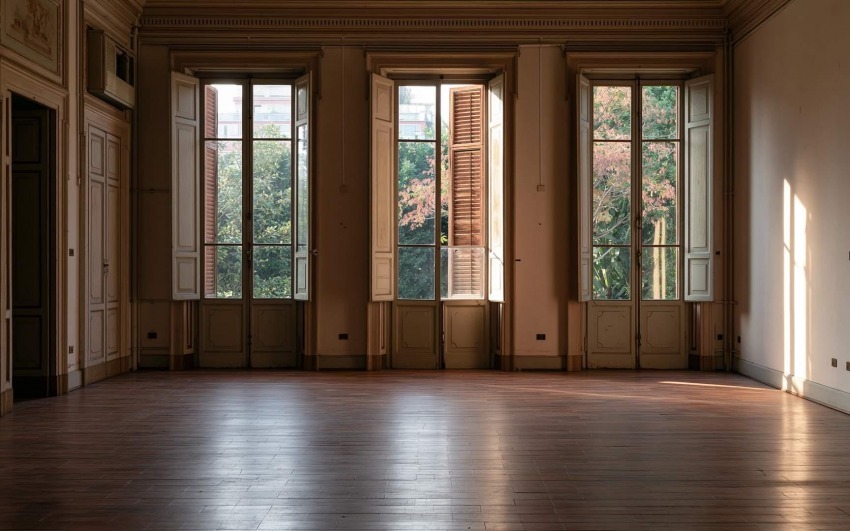
Open a catalogue of contemporary homes and you often find cover-worthy kitchens, theatrical bathrooms, living rooms that look like photo sets. Between one image and the next, a narrow corridor appears, lit by a sad single point — or a vestibule reduced to a knot between doors. That is not a technical detail: it is silent design about what life spends most of its time doing — passing through, pausing, shifting register, leaving one room before entering another.
Open plan has dominated the image of the contemporary home: few walls, few boundaries, maximum flexibility. The promise was freedom — kitchen in dialogue with the living room, light flowing, no "closed" rooms. Over time many have discovered the downside: noise travelling, no refuge, difficulty concentrating or switching off. The response isn't to go back to the closed-off house of the past, but to rethink the value of dedicated spaces: environments with a clear function that the body and mind learn to recognise.
Interior design has long favoured sight: colours, shapes, surfaces. Only recently have we started to talk about touch and smell. Hearing, by contrast, remains the most neglected sense at the design stage — yet it's the one we can't switch off. We live in homes that boom, reverberate, carry voices and noise from one room to another. The result is stress, fatigue, difficulty concentrating and resting.
For decades interior design has chased the idea of a "perfect", unchanging space: same colours, same lights, same layout twelve months a year. The home as a photo set always ready, but often distant from the cycles that govern our body and our mood.Today a different idea is returning: the house as an organism that responds to the seasons. Not an aesthetic whim, but a response to the need to align the environments we live in with natural rhythms — light, temperature, colour, vegetation — with measurable benefits for sleep, concentration and wellbeing.March, with the equinox and the awakening of spring, is the ideal time to rethink interiors in a seasonal key.
For years, interior design has lived with a contradiction: an obsession with effect. Marble-effect. Wood-effect. Metal-effect. Stone-effect. A home that looks like something, rather than truly being something.
For years, we designed homes as if they had to pass a constant visual exam: perfect light, perfect white, the right chair, the right vase. Interiors built to be photographed more than lived in. Digital aesthetics — polished, minimal, hyper-ordered — entered interior design like an unspoken rule: if it isn’t “clean,” it isn’t beautiful; if it isn’t coherent, it isn’t successful; if it can’t be shown, it isn’t desirable.In 2026, this narrative is losing its power. Not because beauty matters less, but because beauty alone is no longer enough. A new need is emerging: anti-algorithm interiors, spaces not designed for the shot, but for everyday life. Less performative homes, more real ones. Environments that don’t seek approval — they restore energy.This is not a return to chaos. It’s a return to meaning.